AC Light Blinking: What It Means & How to Fix It
Aircon light blinking? Learn what error codes mean for Daikin, Mitsubishi, Panasonic & more. Find out when you can fix it yourself and when to call a technician.

Philips
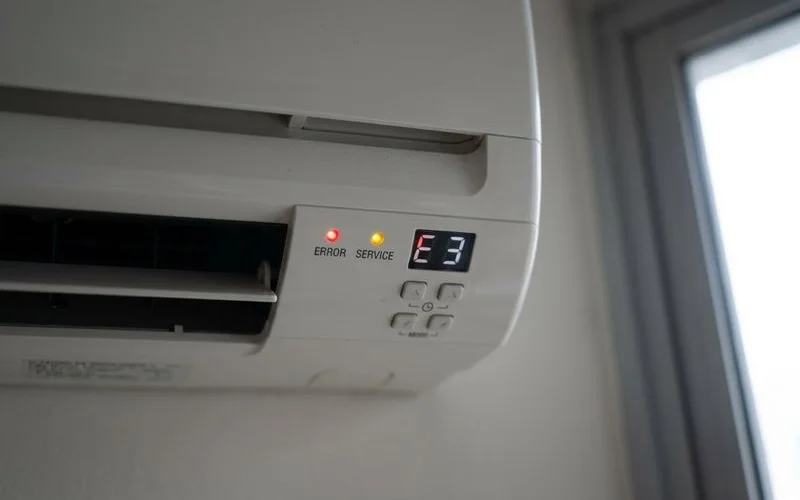
We know the familiar panic that sets in when your air conditioning stops working on a sweltering afternoon. Your unit shuts down, refuses to cool, and suddenly starts flashing an indicator light.
This situation is actually a good thing because AC Light Blinking: What It Means & How to Fix It is quite straightforward.
Our growing team of 26 technicians has seen these specific alert codes daily in local HDBs and commercial offices since we started in 2003. The patterns are easy to understand once you know the basics. Recognizing the cause saves you time and helps you decide whether this is a quick DIY reset or something that needs a professional technician.
Let us look at the common brand codes and walk through the exact troubleshooting steps.
Why Your Aircon Light Blinks
Aircon units use LED indicator lights on the indoor fan coil to communicate errors. When the system detects a fault, it triggers a specific blink pattern instead of shutting down silently.
This diagnostic feature exists because air conditioning units lack digital screens to display text warnings. The flashing codes serve the exact same function as an engine warning light in a car.
A faulty thermistor or a blocked condensate drain pipe will immediately activate this alert, turning off the system to prevent electrical fires.
Our technicians frequently encounter these alerts in Singapore due to high humidity. This excess moisture causes mould buildup and interferes with the delicate internal sensors.
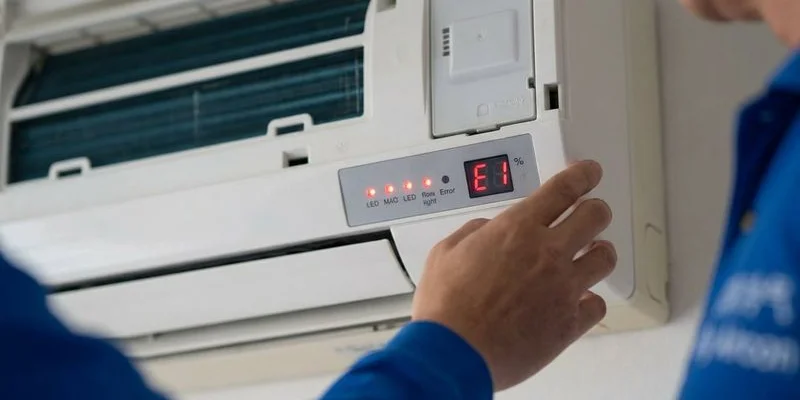
Error Codes by Brand
We have compiled the most common error sequences for the top cooling brands used across Singapore. Every manufacturer programs their printed circuit board (PCB) with a unique diagnostic language.
Daikin
Daikin units typically flash the green operation light to signal minor issues. A blinking red light indicates a severe system failure, while an orange light points to drainage blockages.
You can find the exact fault code using your remote control. Hold the ‘Cancel’ button for five seconds until ‘00’ appears on the screen. Press the button repeatedly to cycle through codes like U4 or A5, and listen for a long continuous beep to confirm your specific error.
- 2 blinks: Indoor thermistor fault. The temperature sensor has failed or is giving incorrect readings.
- 3 blinks: Drain system error. The condensate drain is blocked or the float switch has tripped.
- 4 blinks: Compressor protection activated. The outdoor unit has overheated or tripped on high pressure.
- 7 blinks: Indoor fan motor fault. The fan motor is failing or its PCB connection is loose.
- 9 blinks: Communication error between indoor and outdoor units.
Mitsubishi Electric
Mitsubishi Starmex units communicate through the operation and timer lights on the indoor casing. You must observe the light behaviour to identify the exact issue.
- Operation light flashes: General fault detected. Check the outdoor condenser unit.
- Timer light flashes: Specific sensor or component fault.
- Both lights flash: Communication error between indoor and outdoor units.
- Rapid continuous flash: PCB board fault requiring component replacement.
Our diagnostic teams note that Mitsubishi parts often carry a premium price tag. Catching these alerts early saves you significant money on replacement components.
Panasonic
Panasonic models require a manual check to reveal the hidden alphanumeric codes. Use a paperclip to press and hold the ‘CHECK’ hole on your remote for five seconds until you see double dashes. Use the Timer Up and Down buttons to scroll until you hear a beep.
- H11: Indoor and outdoor communication error.
- H14: Indoor air thermistor fault.
- H16: Outdoor current sensor issue.
- F95: Outdoor heat exchanger sensor fault.
- Timer light 1 blink: Power supply issue or timer setting error.
Samsung & LG
Samsung and LG systems take a more direct approach. They display the alphanumeric codes right on the wireless remotes or built-in digital panels.
- E1: Communication error.
- E2: Sensor fault.
- E4: Compressor overload.
Timer Light vs Power Light: What’s the Difference?
This distinction matters because many homeowners confuse the two indicator types. Getting this wrong leads to unnecessary service calls.
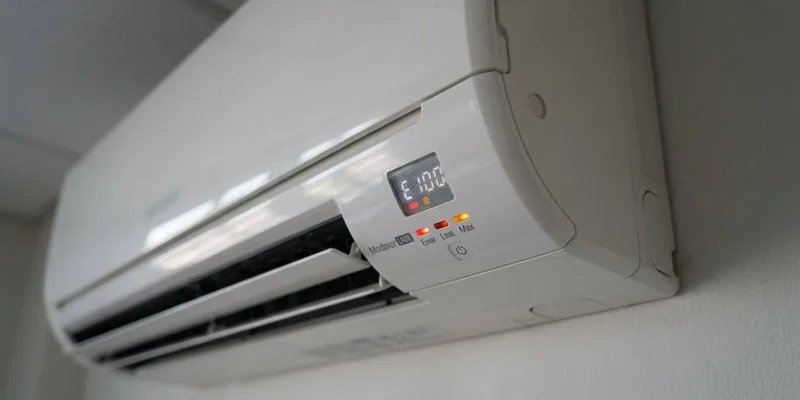
We recommend checking which specific light is flashing before attempting any troubleshooting.
| Light Indicator Type | Common Meaning | Severity Level |
|---|---|---|
| Power or Operation Light | System-level fault, sensor failure, or electrical problem. | High. The unit has shut down as a safety measure. |
| Timer Light | Accidental timer setting, dirty air filter, or self-diagnostic mode. | Low. Often resolved with a simple remote reset. |
| Both Lights Flashing | Communication breakdown between indoor and outdoor units. | High. Indicates damaged wiring or a faulty PCB. |
Quick Fixes You Can Try
Before booking a service call, you can attempt a few basic troubleshooting steps. Our technicians find that a simple reset resolves temporary software glitches nearly half the time.
- Perform a hard power reset: Turn off the cooling unit at the main wall isolator switch. Wait a full five minutes to allow the circuit board to clear its memory, then turn it back on.
- Clear accidental timer settings: Sometimes the timer light blinks because a button was pressed by mistake. Remove the batteries from your remote control for one minute, reinsert them, and power on the system.
- Clean the air filters: Dirty filters restrict airflow and trigger overheating alerts. Wash them with room temperature water, dry them completely, and reinstall. Check our servicing guide for recommended maintenance schedules.
- Inspect the outdoor condenser: Ensure the exterior unit is free from laundry, potted plants, or debris. Restricted airflow forces the compressor to overwork and trigger a protective shutdown.
- Clear the drain pan: A blocked PVC drain pipe causes water to pool inside the unit. This trips the float switch safety mechanism and forces the system to halt.
When to Call a Technician
Some flashing patterns point to hardware failures that demand an experienced professional.
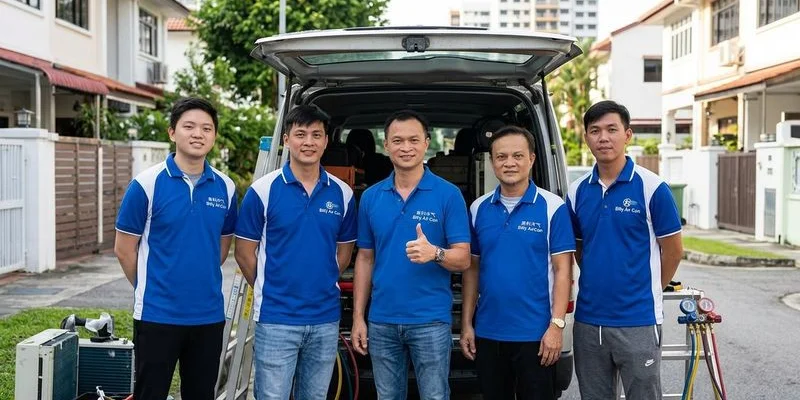
We strongly advise against opening the main casing to fix electrical parts yourself. Doing so risks dangerous electrical shocks and voids your warranty.
- Compressor-related codes: Any fault involving high pressure or the compressor requires a certified specialist. These repairs involve refrigerant gas handling and high-voltage wiring.
- PCB board failures: A burnt or shorted circuit board needs complete replacement. In Singapore, an indoor unit PCB replacement costs between S$350 and S$450, while the outdoor condenser PCB runs from S$480 to S$600.
- Persistent errors: If the indicator continues to flash after a five-minute power cycle, the fault is a legitimate hardware defect.
- Burning smells or grinding sounds: These symptoms alongside a blinking light mean severe mechanical friction or electrical shorts.
Turn off the main power immediately if you detect a burning odour. Keep the system off until a technician arrives.
How Billy Aircon Diagnoses Blinking Lights
When our team of 26 technicians arrives at your property, they follow a strict diagnostic protocol. Every brand requires a different technical approach.
- Extract the specific code: Technicians use the brand-specific remote sequence to pull the exact alphanumeric error.
- Test the flagged component: They use a multimeter to check the voltage and resistance on the suspected sensor, fan motor, or circuit board.
- Examine related systems: A sensor error might actually stem from a hidden water leak that is dripping onto the copper wires.
- Provide transparent repair options: You receive a clear breakdown of the required parts and labour before any work begins.
Our standard repair prices for 2026 reflect the current market rates in Singapore. Thermistor sensor replacements range from S$80 to S$150, while clearing a blocked drain pipe costs S$50 to S$80.
Prevent Future Error Codes
Regular aircon servicing is the most effective way to stop faults before they trigger an automatic shutdown. During a standard service session, technicians clean the delicate sensors, flush the drainage pipes, and verify refrigerant gas levels.
This routine care addresses the root causes of nearly all communication and airflow errors.
For cooling systems older than seven years, consider a chemical wash. This treatment deep-cleans the internal parts that normal vacuuming cannot reach, providing several benefits:
- Clears stubborn jelly-like clogs in the drainage pipe.
- Removes deep-seated mould from the blower wheel.
- Restores accurate temperature readings to the thermistor.
- Improves total cooling efficiency and lowers energy bills.
We highly recommend this intensive cleaning for properties in Singapore, as the constant humidity accelerates internal mould growth. Scheduling professional aircon servicing on a regular basis keeps error codes from recurring.
Do not ignore a flashing indicator light. It is your system asking for help before a minor clog turns into a costly compressor replacement.
Contact Billy Aircon for a fast diagnosis. Our friendly staff will tell you exactly what the code means and fix it efficiently.
Need Professional Aircon Help?
Our experienced technicians are ready to help. WhatsApp us for a fast response — 24 hours guaranteed.
WhatsApp Us Now