Best Aircon Temperature for Sleep in Singapore
Find the ideal aircon temperature for sleeping in Singapore. Learn why 24-26°C works best, how sleep mode saves energy, and tips for a cool, restful night.

Philips
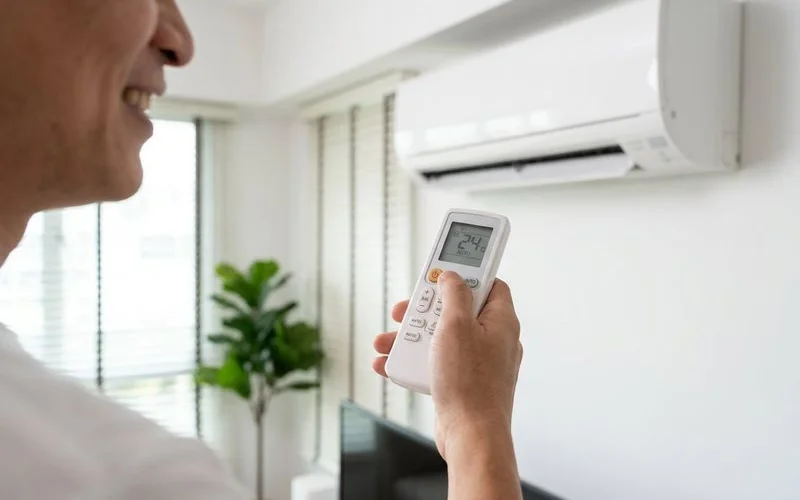
You know how tough it is to get a solid night of rest when the bedroom feels like a sauna. Finding the best aircon temperature for sleep in Singapore is the easiest way to solve this problem.
A major 2025 study revealed that 27.6% of residents here suffer from poor sleep quality.
Our team at Billy Aircon has seen exactly how a poorly configured AC contributes to this issue during our 23 years of servicing homes.
The National Sleep Foundation notes that your core body temperature must drop by about 1°C to initiate and maintain sleep.
That physical shift is the true reason your aircon is the most effective tool for rest.
Let’s look at the science behind these thermal shifts and outline practical ways to adjust your settings for a cooler night.
The Science Behind the Best Aircon Temperature for Sleep in Singapore
Your body follows a circadian rhythm that lowers core temperature in the evening. This temperature drop signals your brain to produce melatonin, the hormone that triggers drowsiness. When your bedroom is too warm, this natural cooling process stalls.
You feel restless, wake up frequently, and miss out on deep sleep stages. In Singapore’s tropical climate, an unconditioned bedroom can easily reach 30°C at night. That heat level is far above what your body needs for quality rest.
Recent 2025 sleep studies show that ambient temperatures above 24°C can reduce your vital Rapid Eye Movement (REM) sleep by 20% to 30%. This happens because your body’s natural thermoregulation, like sweating, actually switches off during REM sleep. You become completely dependent on the room’s temperature to stay cool.
The Ideal Range: 24-26°C
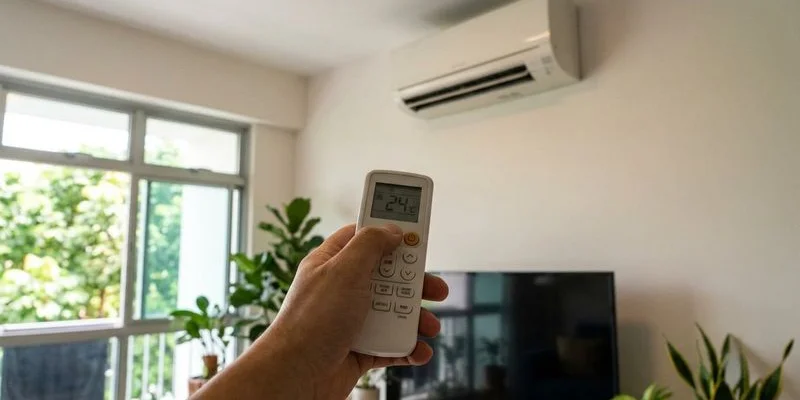
The National Environment Agency (NEA) officially recommends setting your aircon at 25°C for the best balance of comfort and energy efficiency. We completely agree with this baseline after years of servicing bedrooms across the island. Every degree you drop below 24°C forces your compressor to work harder and increases your electricity consumption by 5% to 10%.
Here is a breakdown of the most effective settings:
- 24°C: Best for warm sleepers, those who use thick blankets, or couples sharing a bed (body heat adds up).
- 25°C: The sweet spot for most Singaporeans, providing deep sleep without feeling uncomfortably cold.
- 26°C: Good for light sleepers, individuals sensitive to cold air, or anyone actively watching their electricity bill.
Going below 23°C wastes electricity and causes issues like muscle stiffness, a dry throat, and a blocked nose by morning. Pushing the thermostat above 27°C simply will not provide enough cooling power for restful sleep in our local humidity.
Sleep Mode: Your Best Friend
Most modern aircon units have a dedicated sleep mode. This smart feature gradually increases the room temperature by 1°C to 2°C over several hours. It perfectly matches your body’s natural temperature cycle during rest.
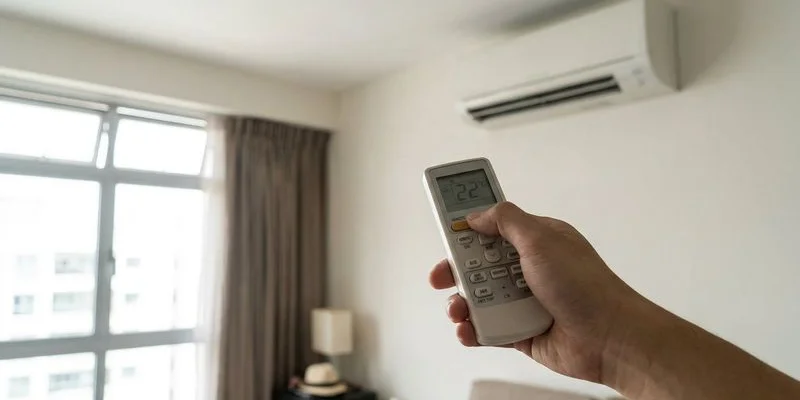
How sleep mode operates:
- You set the initial temperature (starting at 24°C).
- After 1 to 2 hours, the unit raises the setting to 25°C.
- After another 2 to 3 hours, the system may raise it to 26°C.
- Fan speed automatically drops to the lowest setting for quiet operation.
Major brands like Mitsubishi Electric design their sleep profiles to increase by 0.5°C to 1°C every hour up to a maximum limit. This gradual increase means you fall asleep in ideal conditions and stay comfortable as your body enters deeper sleep stages. You are less sensitive to temperature changes during these later cycles.
Our technicians frequently see households cut overnight electricity costs by 20% to 30% simply by using sleep mode instead of a fixed low temperature. The compressor cycles less frequently, which saves power and reduces mechanical wear.
Dry Mode vs Cool Mode for Sleeping
Singapore’s dense moisture is a massive barrier to a good night of rest. The Meteorological Service Singapore reports that our average relative humidity is 84.2%, and it regularly spikes above 90% at night. Even at a cool 25°C, high humidity makes the air feel sticky and uncomfortable.
This is exactly where your aircon’s dry mode becomes incredibly valuable.

Cool mode actively cools the air and removes some moisture as a byproduct. It runs the compressor continuously to maintain your exact set temperature.
Dry mode focuses primarily on removing humidity while keeping the space pleasant. The compressor cycles on and off, which uses significantly less energy.
When to use dry mode for sleep:
- Nights that feel muggy but not extremely hot.
- When you find cool mode too cold but the room feels damp.
- During the monsoon season when humidity levels are at their highest.
When to stick with cool mode:
- Very hot nights with outside temperatures above 28°C.
- If your bedroom gets direct afternoon sun and retains structural heat.
- When you need consistent and strong cooling power.
Timer Settings That Work
If you prefer not to run your aircon all night, you can use the timer function strategically. We recommend syncing your timer with your natural sleep cycles. Deep, restorative sleep happens mostly in the first half of the night, making a cool room critical during those hours.
Here are three effective timer strategies:
| Strategy | Setting Details | Best For |
|---|---|---|
| Option 1: The Bedtime Chill | Set a 4-hour timer starting at bedtime. | Falling asleep fast. Your body’s natural temperature regulation takes over later. |
| Option 2: The Morning Breeze | Set a delayed start for 2 hours before you wake up. | Waking up feeling refreshed instead of sweaty. |
| Option 3: The Split Shift | Run for 4 hours after bedtime, then restart 2 hours before your alarm. | Maximizing comfort while still reducing total running hours. |
Using the split shift strategy prevents you from waking up shivering during the early morning hours.
Fan Speed Matters Too
For sleeping, always use the lowest fan speed or the auto-quiet setting. The World Health Organization (WHO) recommends keeping background noise below 30 dBA in bedrooms to prevent sleep disruption. Higher fan speeds can easily push noise levels up to 45 dBA or more, which pulls you out of light sleep stages.
The gentle air circulation at a low speed is completely sufficient once the room has cooled down.
Direct airflow on your body while sleeping causes muscle cramps, a stiff neck, and dry eyes. You should point the louvres upward so the cool air drops naturally across the room instead of blasting directly onto the bed. This creates a gentle cascade of cold air that cools the space evenly.
Common Mistakes
Many homeowners accidentally sabotage their own comfort by ignoring a few basic maintenance rules.
Setting the Temperature Too Low
Running the system at 18°C to 20°C does not help you fall asleep any faster. It wastes massive amounts of electricity, strains your compressor, and usually gives you a sore throat by morning.
Not Servicing Your Aircon
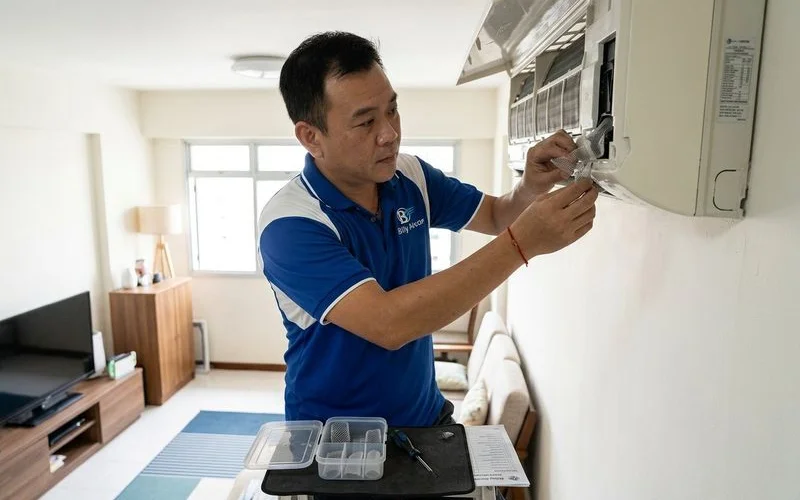
A dirty unit works twice as hard to reach your desired setting. It makes more noise and blows dust and mould spores across your bed, which triggers nighttime allergies. Regular aircon servicing keeps your unit running quietly and efficiently.
Blocking Vents With Furniture
If your bed sits directly under the unit or a tall wardrobe blocks the airflow, the room will never cool evenly. Poor circulation forces the system to overwork and creates freezing cold spots next to warm zones.
Ignoring the Filter
A heavily clogged filter can reduce your system’s cooling efficiency by up to 15%. You must clean your filter every two weeks to guarantee optimal overnight performance.
When Your Aircon Can’t Keep Up
If your system runs all night but the room still feels warm, the hardware likely needs professional attention. We frequently see these four common issues in Singapore homes.
A simple diagnostic check can identify the following problems:
- Low gas levels severely limit cooling performance, but a quick gas top-up restores full capacity.
- Dirty coils inside the unit reduce heat exchange efficiency, which a professional chemical wash fixes immediately.
- Undersized units cannot handle the heat load. An average HDB master bedroom requires a 9,000 to 12,000 BTU unit, so talk to us about proper BTU sizing and installation.
- Aircon not blowing cold air at all means there is a mechanical failure. Check our troubleshooting guide for the most common causes.
The Bottom Line
Set your aircon to 24-26°C, activate sleep mode, and keep the fan speed as low as possible. You should clean your filters regularly and get your unit serviced every 3-4 months to maintain peak performance. These simple adjustments give you the best aircon temperature for sleep in Singapore without inflating your electricity bill.
If your system struggles to maintain comfortable temperatures at night, contact Billy Aircon for a thorough diagnostic check. A well-maintained unit backed by regular aircon servicing should easily keep your bedroom at the perfect sleeping temperature all night long.
Need Professional Aircon Help?
Our experienced technicians are ready to help. WhatsApp us for a fast response — 24 hours guaranteed.
WhatsApp Us Now