Why Your Aircon Has Condensation & How to Stop It
Aircon condensation dripping or sweating on vents? Learn the causes, how to tell condensation from a real leak, and practical fixes for Singapore's humid climate.

Billy Aircon Team
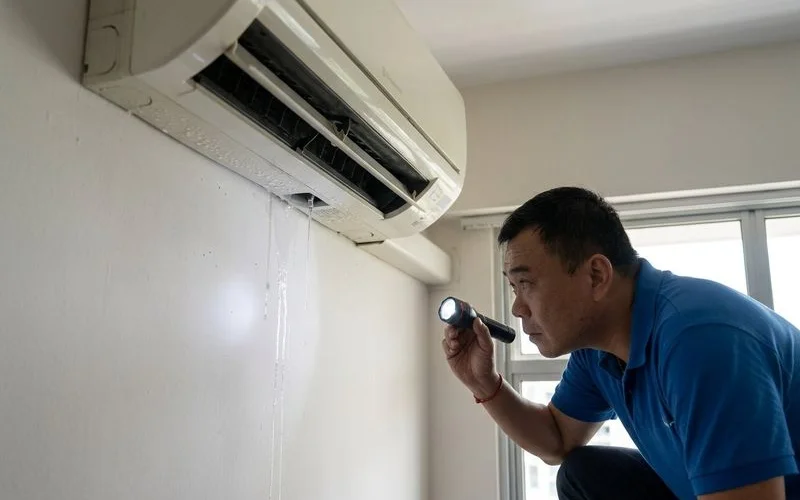
You spot water droplets forming on the vents, and figuring out why your aircon has condensation & how to stop it becomes an immediate priority.
We see this exact issue every day during our service calls across Singapore, and sometimes there is even a slight drip. Billy Aircon has been tackling these cooling challenges since 2003, growing from five technicians to a dedicated crew of 26. This extreme moisture load pushes your cooling system to its absolute limits.
The Meteorological Service Singapore notes that our local average relative humidity sits at 84%. We know that condensation is common in this climate, but ignoring it leads to costly damage. Let’s look at the actual data and explore practical ways to fix the problem.
Why Your Aircon Has Condensation & How to Stop It at the Source
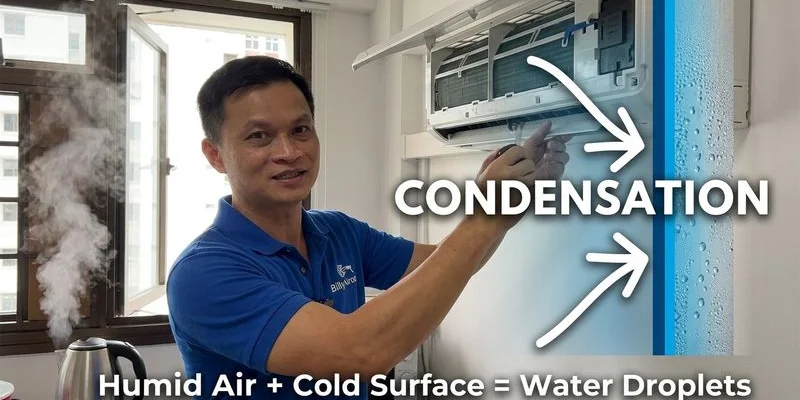
The physics is straightforward. Air holds moisture, and warm air holds significantly more moisture than cold air. When humid room air passes over the freezing evaporator coil inside your unit, the air temperature drops sharply.
Our technicians observe that latent cooling actually accounts for a massive portion of an air conditioner’s workload in tropical regions. The moisture it was carrying has to go somewhere, so it condenses into water droplets on the coil and other cold surfaces.
Latent cooling, which is the energy required to remove moisture from the air, accounts for over 70% of total cooling demand in tropical environments like Singapore.
In a properly working system, this condensation collects in the drain pan below the coil and flows out through the drain pipe. You normally never see it. Problems start when this drainage system fails to work as designed.
We often find that maintaining an ideal indoor humidity level of 40% to 60% drastically reduces this excess moisture. A simple digital hygrometer helps you track this metric in your living space.
Condensation vs Actual Leak: How to Tell
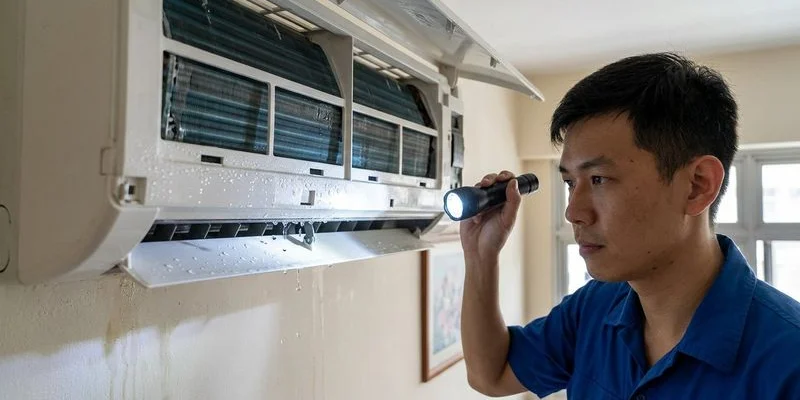
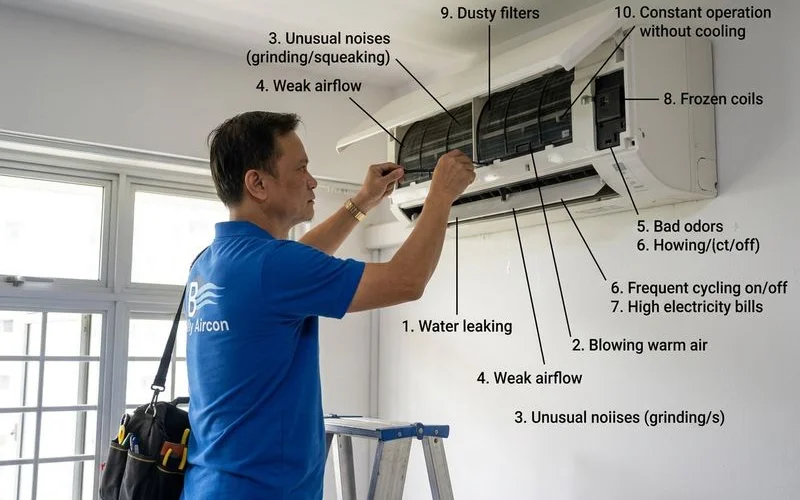
Not all water around your unit is simple condensation. You need to identify the source quickly to prevent water damage to your flooring and furniture. We use a straightforward visual checklist to diagnose the issue during site visits. The table below outlines the primary differences.
| Feature | Normal Condensation | Actual Water Leak |
|---|---|---|
| Appearance | Fine, uniform moisture | Steady dripping from one spot |
| Formation | Small droplets forming slowly | Rapid pooling on the floor |
| Timing | Appears during high humidity | Continues even when turned off |
| Location | Only on the coldest parts | Water streaks down the back wall |
If you observe pooling water or steady drips, that points to a severe drainage failure rather than standard moisture buildup. You should review our detailed guide on aircon water leaking for specific troubleshooting steps.
Our team is ready to help if the problem persists.
Prompt action saves you from expensive structural repairs.
Common Causes of Excessive Condensation
Several specific component failures force excess moisture to gather inside the casing.
1. Poor Insulation on Copper Piping
The copper pipes connecting your indoor and outdoor units carry refrigerant at very low temperatures. These pipes must be fully wrapped in foam insulation to prevent the cold surface from touching humid room air. We frequently see older HDB and condo units where the original 3/8-inch insulation has degraded after five to seven years. Exposed sections immediately start forming condensation that drips down your walls.
This issue is entirely preventable with better materials. Our recommendation is upgrading to 1/2-inch Class 1 Armaflex insulation during installation or repairs. This thicker material provides a stronger temperature gradient and significantly better fire resistance. Homeowners face far fewer condensation drips with this targeted upgrade.
2. Blocked Drain Line
Your system produces up to 10 to 20 litres of condensate water daily during hot months. This water normally drains through a small PVC pipe routed to the nearest floor trap. We often encounter blockages caused by a substance called Zoogloea. This thick, jelly-like bacterial slime thrives in the dark, damp environment of your drain pan and rapidly clogs the pipes.
The older industry standard for these drainage pipes was 13mm in diameter. Our modern installations now use upgraded 16mm PVC pipes to ensure smoother water flow and reduce choking risks. A larger pipe diameter easily flushes out dust and minor slime buildup before it causes an overflow.
3. Dirty Air Filters
Clogged filters severely restrict airflow across the evaporator coil. With less warm air flowing over it, the coil temperature drops below its optimal 4°C to 7°C range. We see this lead to immediate frost buildup on the metal fins. The excess moisture then melts, overwhelms the drain system, and drips directly from the vents or casing.
This restriction also forces the compressor to work harder, increasing your electricity bills. Our technicians consider regular cleaning the easiest way to prevent this specific type of condensation.
You can resolve this without any special tools.
4. Low Refrigerant
When refrigerant gas like R32 or R410a runs low, the pressure changes cause the evaporator coil to become excessively cold. This creates uneven ice formation across the cooling fins. We know that when this ice eventually melts, the sheer volume of water instantly floods the drain pan.
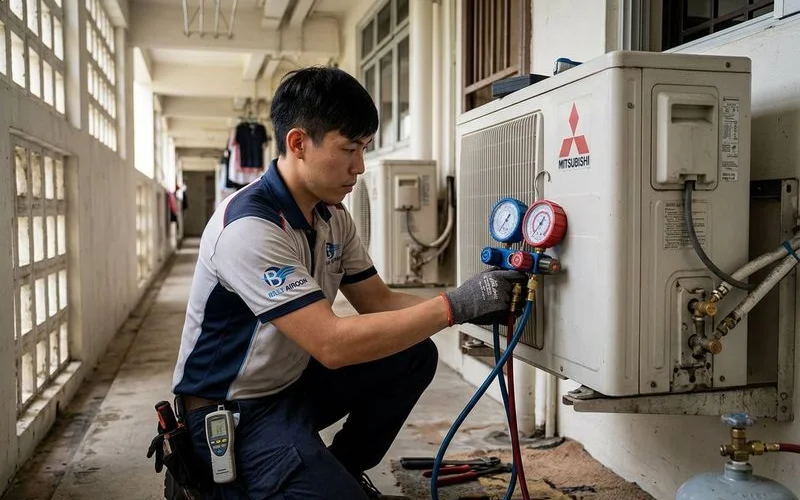
If you suspect a leak or low gas levels, you should check the signs of low refrigerant and schedule a professional top-up. A technician will pressure test the copper lines to locate the leak source before adding new gas.
5. High Indoor Humidity
Opening windows while the unit runs introduces fresh humid air faster than the system can dehumidify it. Cooking, showering, or drying laundry indoors also spikes the moisture levels well past 80%. We constantly remind customers to keep the cooled area completely sealed.
Every time you open a door, a rush of tropical air enters and immediately condenses on the cold plastic casing. Managing your indoor environment is just as important as maintaining the hardware itself.
Quick Fixes You Can Do Today
Homeowners can resolve minor moisture issues without calling a professional. These straightforward maintenance steps take only a few minutes but make a massive difference. We highly recommend adding them to your monthly cleaning routine. A digital hygrometer, which costs around $10 to $15 online, will help you track if these fixes are keeping your humidity in the ideal 40% to 60% range.
- Clean or replace your air filters: Do this every two to three weeks. Improved airflow reduces excessive condensation on the coil and vents.
- Keep doors and windows closed: Every time you open a door, humid air rushes in. Let your unit work in a sealed environment for the best results.
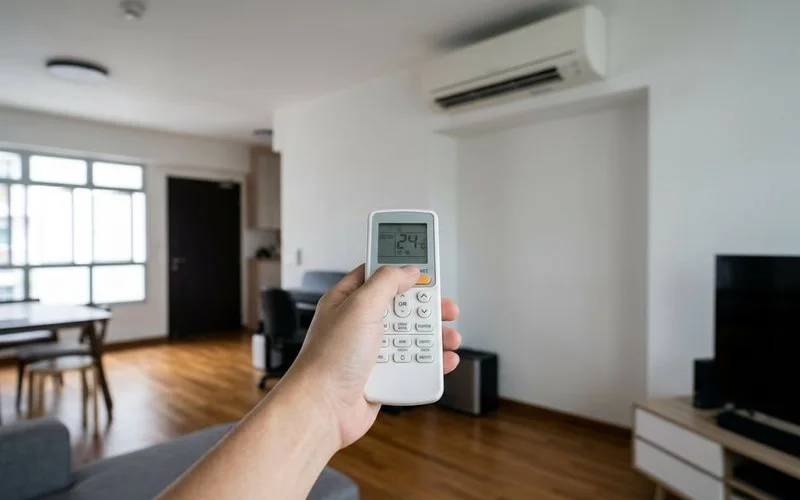
- Use dry mode: On particularly humid days, switch your remote to dry mode for an hour. This brings moisture levels down efficiently before you switch back to cool mode.
- Check visible pipe insulation: Look at the copper pipes where they enter the indoor unit. If you see bare copper or crumbling foam, the insulation needs immediate replacement.
- Clear the drain line: If you can access the drain outlet near the floor trap, check for blockages. Pouring a cup of warm water mixed with a splash of white vinegar breaks down minor bacterial slime.
Professional Solutions
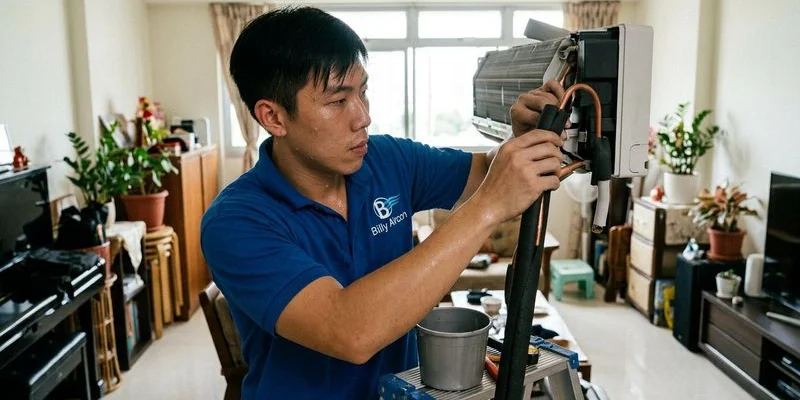
When home fixes fail to stop the dripping, a technician must address the root cause of the moisture. Complex blockages and degraded materials require specialized tools. We approach these repairs by systematically testing each drainage component. The solutions below tackle the most stubborn water issues effectively.
- Drain line flushing: Technicians use an industrial wet vacuum or pressurised water to clear stubborn Zoogloea blockages deep inside the PVC pipe. This essential step is part of a standard aircon servicing visit.
- Pipe re-insulation: Technicians strip away degraded foam and install fresh, 1/2-inch Armaflex insulation on all exposed copper pipes. This completely stops condensation drips from the piping and improves cooling efficiency.
- Drain pan cleaning and realignment: The drain pan often shifts slightly over the years, causing water to pool instead of flow. A technician repositions the pan and thoroughly sanitises it.
- Chemical wash: For units with heavy internal biofilm buildup, a chemical wash cleans the evaporator coil thoroughly. This process restores proper drainage flow and dramatically improves dehumidification performance.
- Drain pump check: Some commercial offices and condos use a condensate pump to push water to a distant drain point. If this pump fails, water backs up instantly. A reliable replacement pump, like a Refcenter or Gilinger model, costs around $126 to $150 including standard installation.
Why Your Aircon Has Condensation & How to Stop It Permanently
Regular aircon servicing every three to four months is the most effective prevention strategy for Singapore residents. During servicing, technicians clean the drain pan, flush the drain line, inspect the insulation, and wash the evaporator coil. We address every major cause of condensation before it becomes a visible, destructive problem.
In a tropical climate, minor moisture on the internal cold parts is perfectly normal. What is not normal is dripping, pooling, or dampness that stains your walls and floors. If you are dealing with persistent moisture issues, contact Billy Aircon for a proper inspection.
We will locate the exact cause and fix it, usually in a single visit. Now that you know why your aircon has condensation & how to stop it, you deserve a cool, dry, and comfortable home. Trust professional aircon servicing in Singapore to keep moisture problems at bay.
Need Professional Aircon Help?
Our experienced technicians are ready to help. WhatsApp us for a fast response — 24 hours guaranteed.
WhatsApp Us Now