How Often Should You Service Your Aircon in Singapore?
Find out the ideal aircon servicing frequency for Singapore's climate. Learn why every 3-4 months works best, what happens when you skip servicing, and whether contracts are worth it.

Philips
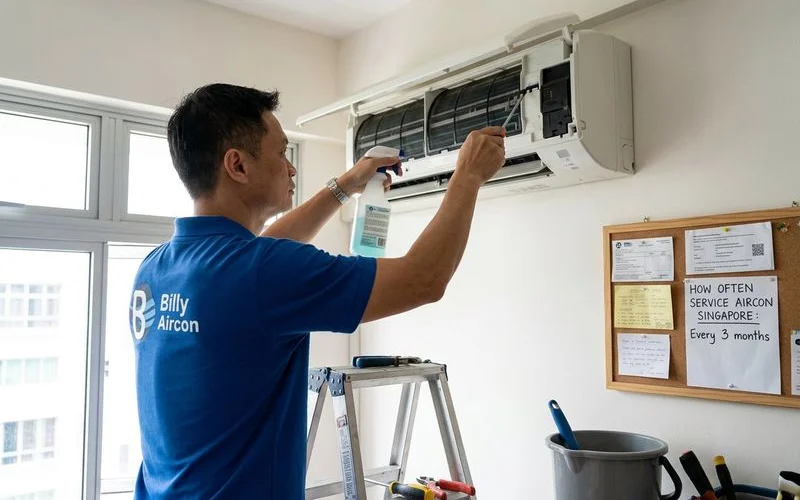
We hear the same question from homeowners almost every single day. You probably notice your electricity bill creeping up before you actually feel a drop in cooling performance. This is a common situation across the island. How often should you service your aircon in Singapore?
Since founding Billy Aircon in 2003 with just five people, our team has grown to 26 technicians dedicated to keeping Singapore cool. Our daily schedules show us exactly what happens when maintenance gets pushed back.
That tropical weather puts massive strain on cooling systems. Let us review the real-world data, look at what causes the most wear and tear, and outline a practical maintenance schedule for your home or office.
The Short Answer: Every 3-4 Months
For most local households, booking a service every three to four months is the gold standard. This timeline ensures you schedule professional maintenance three to four times per year.
We recommend this specific routine based on over two decades of inspecting units from Jurong to Pasir Ris. Your system runs far more efficiently when the internal copper coils and filters stay perfectly clean.
Consistent maintenance prevents surprise breakdowns during the hottest months of the year. Clean hardware also maintains healthy indoor air quality for your family.
Here is a quick breakdown of what regular maintenance achieves:
- Extends your compressor lifespan from an average of 5 years to well over 10 years.
- Keeps energy consumption stable by ensuring optimal airflow.
- Reduces the risk of sudden water leaks ruining your paint or wallpaper.
- Prevents microscopic mould spores from circulating through your bedrooms.
Why Singapore Needs More Frequent Servicing
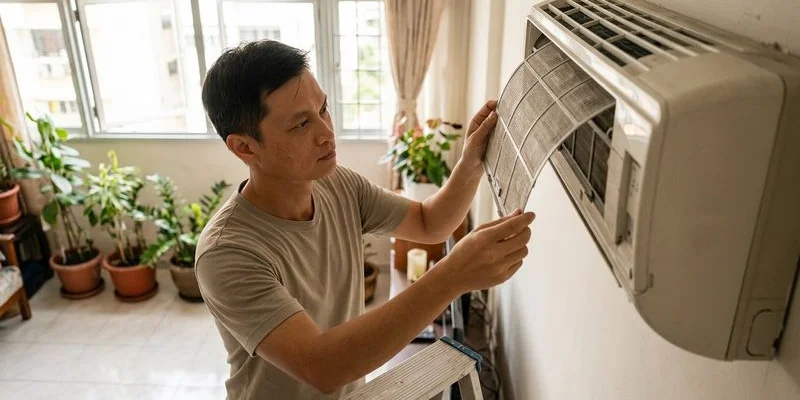
Our island presents a worst-case scenario for air conditioning hardware. You cannot compare our maintenance needs to those in countries with four distinct, milder seasons.
We see units operating 8 to 16 hours daily throughout the entire year. High running hours lead to a rapid accumulation of dust, household grime, and biological growth inside the plastic casing.
Data from the National Environment Agency consistently shows average outdoor humidity levels hovering around 84%. Your machine’s drain system must process litres of condensate water every single day.
This constantly moist interior environment promotes rapid algae and slime development. Aspergillus mould spores thrive perfectly in the dark, damp space of an evaporator coil or the plastic drain pan.
The Impact of Urban Pollution
Urban pollution adds another heavy layer of stress to your cooling system. Construction dust from nearby BTO projects and traffic emissions get drawn straight into your indoor units.
Even premium HEPA-grade filters cannot stop all fine PM2.5 particles from settling on the internal aluminium fins. Without professional intervention, mould colonies establish themselves firmly within just eight to twelve weeks.
Servicing Frequency by Situation
Every property has unique environmental factors that dictate its ideal schedule. We evaluate the specific usage patterns before suggesting a rigid timeline for any client.
A standard HDB flat with regular evening use differs drastically from a 24-hour commercial server room. Your lifestyle directly impacts how quickly dirt builds up inside the machinery.
Use this data-driven guide to find your exact requirement:
| Situation | Recommended Frequency | The Reason |
|---|---|---|
| Standard HDB/condo (daily use) | Every 3 months | Baseline for our 84% average humidity |
| Light usage (weekdays only, 6-8 hrs) | Every 4 months | Less runtime equals slower buildup |
| Heavy usage (16+ hrs daily) | Every 2-3 months | Rapid dust and moisture accumulation |
| Pets in the home | Every 2-3 months | Pet dander clogs standard mesh filters quickly |
| Smokers in the home | Every 2-3 months | Tar residue coats the sensitive evaporator coil |
| Near active BTO/construction sites | Every 2 months | Fine concrete dust bypasses basic filters |
| Coastal areas (Sentosa, East Coast) | Every 3 months | Sea salt air accelerates copper pipe corrosion |
| Commercial/office units | Every 2-3 months | High occupancy increases biological load |
What Happens When You Skip Servicing
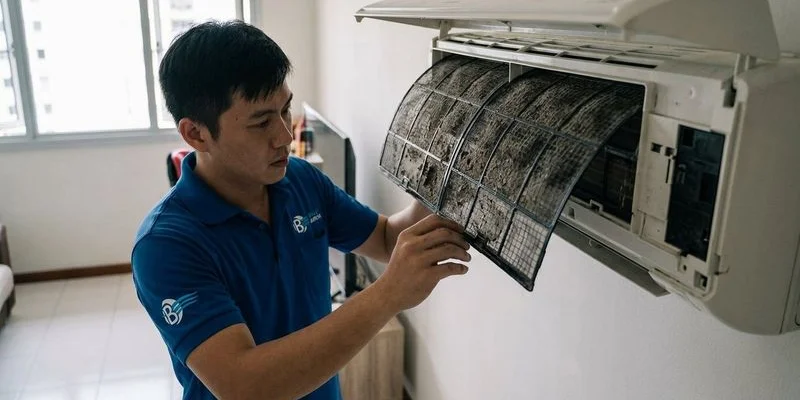
We handle the messy consequences of neglected cooling systems constantly. The degradation process follows a very predictable and costly timeline.
After 4 to 6 Months Without Maintenance
Your air filters become heavily choked with thick grey dust. Cooling efficiency drops by 5% to 15%, forcing the compressor to work much harder to hit your set temperature. The main drain line starts developing a slick algae buildup. You will also notice an increase in your monthly SP Group electricity statement.
After 6 to 9 Months of Neglect
We start seeing visible mould colonies spreading across the blower fan blades. The drain pan fills with stagnant water and thick, jelly-like slime. A distinct, musty smell hits you the moment you turn the system on. Water may start leaking straight down your wall as those drain clogs solidify.
After 12 Months or More
Heavy bacterial contamination becomes a serious respiratory hazard. Your PVC drain pipe is completely blocked, causing dirty water to overflow freely from the indoor casing. The compressor faces immense strain, greatly increasing the risk of the unit not cooling properly at all. You will likely need a full chemical wash to strip the grime, costing roughly three times more than standard maintenance.
After 2 Years of Zero Maintenance
Major component failures become almost guaranteed at this stage. Replacing a burnt-out printed circuit board (PCB) or fan motor easily costs between $150 and $300 in Singapore. Refrigerant gas leaks often develop from deeply corroded copper connections. The equipment’s total lifespan shrinks by three to five years.
What Happens During a Standard Service
A proper aircon servicing appointment involves much more than just washing the plastic filters. Professional technicians follow a strict protocol to ensure every critical component functions perfectly.
We systematically inspect, clean, and test the internal mechanics of your system. This thorough process typically takes 20 to 30 minutes per wall-mounted unit.
Here is the exact checklist professionals use:
- Filter deep clean: We remove, wash, and dry the primary air filters.
- Coil inspection: Technicians check the aluminium fins for embedded mould and dust.
- Fins clearing: We use specific alkaline coil cleaners to dissolve stubborn organic buildup safely.
- Pan sanitisation: Your drain pan is cleared of all standing water and biological slime.
- Line flushing: We use high-pressure vacuums to blast clear the main PVC drain pipe.
- Blower wheel check: The cylindrical fan blades are inspected for weight-imbalancing dust.
- Water flow test: We pour clean water through the system to verify zero blockages.
- Thermostat calibration: The supply air temperature is measured to confirm optimal cooling.
- Hardware audit: Technicians check for loose electrical connections and rattling bearings.
Servicing by Unit Type
Different hardware designs require slightly different maintenance approaches. We adapt our techniques based on the specific brand and model installed in your property.
Wall-mounted split systems from popular brands like Daikin and Mitsubishi Electric dominate local homes. These common units are highly accessible and require routine maintenance every three to four months.
Ceiling cassette units are standard in larger commercial spaces and modern landed properties. You should service these every three to four months, though they take slightly longer due to ladder access requirements.
Ducted and Portable Systems
Ducted central cooling systems need quarterly filter replacements or cleaning. You must also schedule a specialised, deep duct cleaning annually to remove hidden dust. Standard appointments cannot reach the buildup hiding deep inside the ceiling ductwork.
Portable units work incredibly hard by exhausting hot air through a single window hose. We suggest cleaning these compact machines every two to three months. Their smaller mesh filters clog rapidly with floor-level dust and pet hair.
Window cooling units share a three to four-month schedule with wall-mounted split systems. Our crews must pay extra attention to the rear condenser coil on these models. That back section faces the outdoors directly and collects leaves, rain residue, and street pollution.
Service Contracts vs Ad Hoc
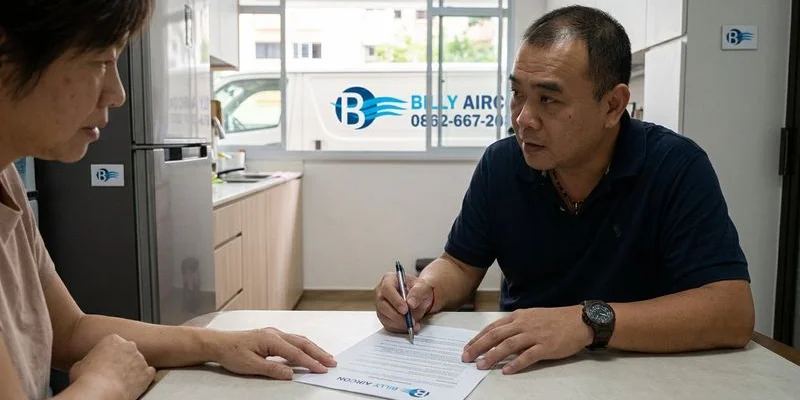
Many property owners debate between booking single appointments or signing an annual agreement. We analyze the numbers to show which option provides better long-term value.
Service contracts secure a guaranteed number of visits per year at a heavily discounted rate. You avoid booking delays and price surges during peak seasons like the weeks leading up to Chinese New Year.
Here is a breakdown of typical market rates in 2026:
| Number of Units | Ad Hoc (4 visits/yr) | Contract (4 visits/yr) | Estimated Savings |
|---|---|---|---|
| 1 unit | $200 to $280 | $160 to $200 | 20% to 30% |
| 2 units | $360 to $480 | $280 to $360 | 20% to 25% |
| 3 units | $480 to $660 | $380 to $480 | 20% to 25% |
| 4 units | $600 to $800 | $460 to $600 | 20% to 25% |
Making the Right Choice
Annual agreements offer significantly lower per-visit pricing. Our administrative team tracks your schedule and sends automatic reminders, so you never miss a cleaning cycle. Contract customers also receive priority dispatch when unexpected emergency breakdowns happen.
Ad hoc bookings make sense if you only have a single, rarely used machine. You might prefer this route if you are highly disciplined about managing your own home maintenance calendar. Single bookings also let new homeowners test out a company’s reliability before committing long-term.
Signs You Need Servicing Now
Sometimes your equipment will send clear warning signals before the next scheduled visit. We urge customers to act quickly when performance drops suddenly.
Ignoring these red flags usually leads to expensive hardware failure. A struggling compressor draws excess electricity, inflating your utility bills rapidly.
Watch out for these immediate warning signs:
- The room feels warm even when set to 20°C.
- Sour, vinegar-like odours blow from the directional louvres.
- Water drips steadily from the bottom corners of the indoor casing.
- Loud buzzing or metallic grinding noises interrupt the normal quiet hum.
- Specks of black dust shoot out onto your bed or floor.
- The compressor runs non-stop without ever tripping the thermostat.
- Your monthly electricity statement spikes without a change in usage habits.
These specific symptoms tell us a standard cleaning will likely resolve the blockage or airflow issue. Delaying action turns a simple $50 visit into a mandatory $150 chemical wash. You might even face a $250 repair bill if the fan motor burns out from the extra strain.
The Bottom Line
Maintaining optimal indoor comfort requires a proactive approach. How often should you service your aircon in Singapore? You should aim for every three to four months as a solid baseline.
We know that adjusting this timeline based on your specific location and daily usage yields the absolute best results. Spending $40 to $70 per routine visit on aircon servicing protects a machine that costs thousands of dollars to replace.
Routine care keeps your monthly utility bills low and prevents nasty midnight water leaks. Need to schedule your next appointment?
Contact Billy Aircon to secure a booking with our experienced team. We service all major brands and offer straightforward annual agreements. Review our current servicing prices to see exactly what we charge.
Need Professional Aircon Help?
Our experienced technicians are ready to help. WhatsApp us for a fast response — 24 hours guaranteed.
WhatsApp Us Now