Aircon Insulation: Why It Matters & Signs of Damage
Damaged aircon insulation causes condensation, water leaks, and higher electricity bills. Learn how to spot insulation problems and when to replace it in Singapore.

Philips
Many property owners treat the black foam wrapping around their copper pipes as an afterthought. You probably focus more on the compressor brand or the energy efficiency rating.
Our team at Billy Aircon started with just five technicians back in 2003. Today, a dedicated crew of 26 professionals works tirelessly to keep Singapore cool. Over the years, we have seen exactly how ignoring that simple foam layer destroys expensive equipment and interior walls.
That dark wrapping is doing critical work to stop condensation from forming inside your walls. When it degrades in our harsh tropical climate, you end up facing ruined false ceilings and massive electricity bills.
Aircon Insulation: Why It Matters & Signs of Damage is the precise topic we are tackling today. We will break down what this material actually does, the critical warning signs of failure, and the exact steps you need to take to protect your property.
What Aircon Insulation Does
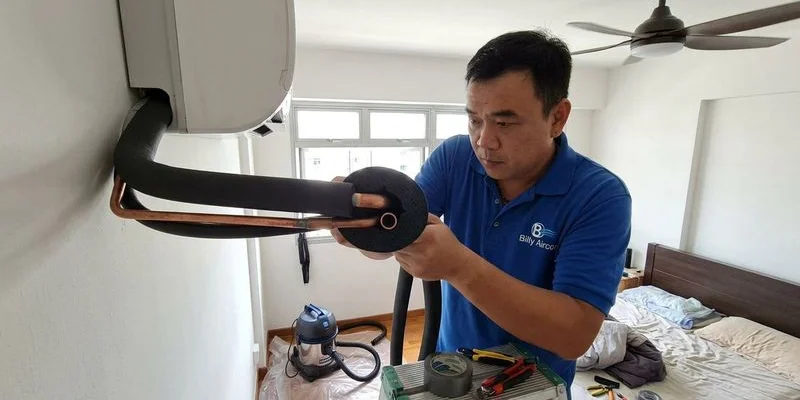
Air conditioning systems rely on two copper pipes to connect your indoor fan coil to the outdoor compressor unit. The smaller liquid line carries high-pressure liquid refrigerant directly to your room. The larger suction line transports cold, low-pressure gas back outside to repeat the cycle.
This larger suction line constantly runs at icy temperatures between 5°C and 15°C. This sits far below Singapore’s typical 24°C daily dew point. Without a thick protective barrier, moisture in the ambient air immediately condenses on the cold metal surface.
High-quality materials like Armaflex Class 0 closed-cell rubber provide a specific thermal conductivity rating of around 0.034 W/mK. This precise engineering stops heat transfer dead in its tracks.
Proper wrapping serves three mandatory purposes for any residential or commercial setup:
- Stops ceiling and wall damage: A solid foam barrier keeps our 84% average humidity strictly separated from the cold pipe. This stops water droplets from forming and rotting away your plasterboard.
- Forces peak compressor efficiency: Bare pipes absorb heat from the surrounding room air before the gas even reaches the compressor. Your system works much harder and burns more electricity without that thermal barrier.
- Defends against copper corrosion: Bare metal exposed to humid air will oxidise and pit rapidly. This corrosion directly causes frustrating refrigerant leaks that ruin your cooling capacity.
Aircon Insulation: Why It Matters & Signs of Damage
Condensation Drips Along the Pipe Run
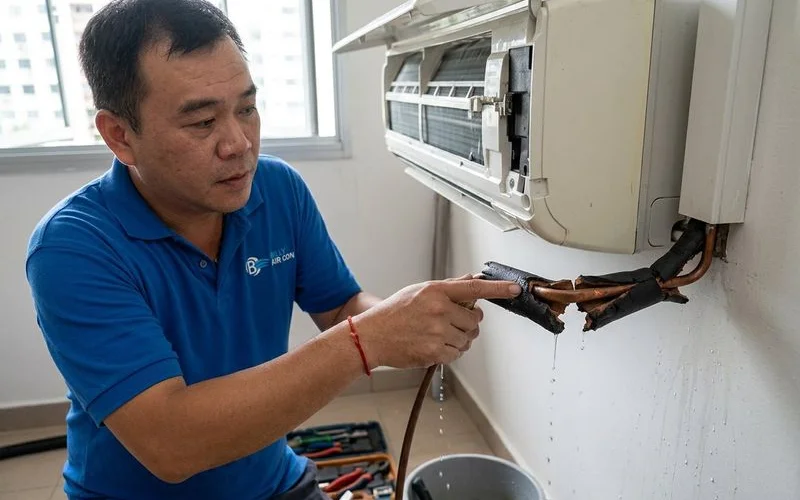
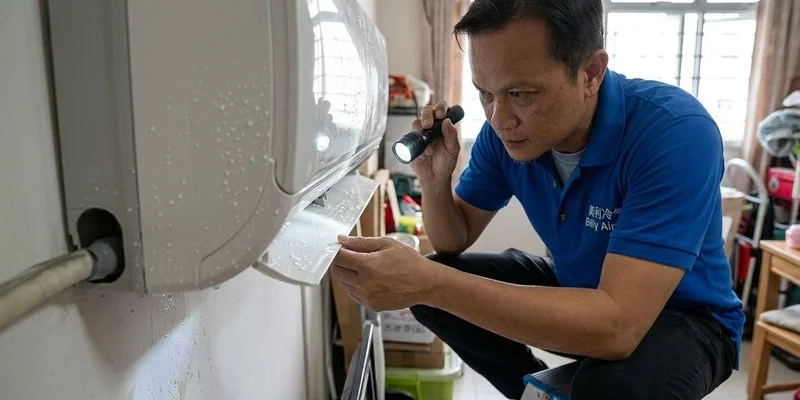
Water droplets forming on the connections between your units serve as the most obvious warning sign. You will usually spot this heavy sweating on the thicker suction line where the rubber barrier has failed.
Water stains on your PVC trunking joints mean the foam sections have pulled apart inside the casing. This dripping water is far more serious than a simple visual annoyance.
The National Environment Agency (NEA) actively monitors dripping aircon pipes because they create perfect breeding grounds for Dengue-carrying mosquitoes. You could face a strict fine of up to $1,000 if your uninsulated compressor pipes create stagnant water puddles below your HDB flat.
Crumbling or Brittle Foam
Intense sunlight and ambient heat cause standard nitrile rubber to break down at a rapid pace. The sections mounted outside your window ledge naturally deteriorate the fastest.
You will see the black material turn a chalky grey colour before becoming completely stiff. The physical structure literally crumbles into dust when you squeeze it.
We always check these exterior sections closely during routine maintenance visits. A degraded foam shell loses all its thermal resistance even if it technically still surrounds the copper pipe.
Gaps or Missing Sections
Building maintenance contractors or simple physical wear can rip holes in the protective wrapping. Pests like rats occasionally chew straight through the soft rubber inside commercial ceiling voids.
Even a tiny half-inch gap exposes icy metal directly to our heavy tropical moisture. This creates a highly localised condensation point that acts like a constantly running tap right inside your walls.
Professional installers seal every single joint with specialised Armaflex 520 adhesive or heavy-duty vinyl tape to prevent these hidden gaps from forming.
Mould Growth on or Around Insulation
Persistent moisture from a failed thermal barrier creates the ultimate breeding ground for harmful fungi. Aspergillus and other common mould spores thrive in the dark, damp environment inside your PVC aircon trunking.
You might spot suspicious black patches spreading across the paintwork near your pipe runs. A persistent musty smell in a specific bedroom often points directly to soaked, mouldy foam hiding just out of sight.
Ice Formation on Exposed Pipes
Extreme cases of material failure can lead to solid frost forming right on the bare copper. This typically happens when your system is simultaneously struggling with low gas pressure.
This dual failure creates a massive mechanical headache for the compressor unit. The melting frost eventually overwhelms your drainage system, and the ice on the evaporator coil proves your unit is bleeding cooling efficiency by the minute.
How Singapore’s Climate Accelerates Wear and Tear
Singapore’s tropical environment acts like a pressure cooker for rubber and foam building materials. The year-round combination of high humidity and intense ultraviolet radiation destroys inferior materials incredibly fast.
Since your suction line pushes gas at roughly 5°C to 15°C, a massive temperature clash occurs the second your insulation cracks.
We see a stark difference in material longevity compared to cooler, drier countries.
| Climate Environment | Average Local Humidity | Expected Material Lifespan |
|---|---|---|
| Temperate (e.g., UK, Northern US) | 50% - 60% | 8 to 10 Years |
| Tropical Indoors (Singapore) | 80% - 90% | 4 to 6 Years |
| Direct Sun Exposure (Singapore) | 80% - 90% | 2 to 3 Years |
There is no dry winter season here to give your equipment a break. A tiny tear in the foam results in immediate, permanent water condensation that requires intervention.
When to Schedule a Replacement
You must swap out the old wrapping the moment it stops performing its primary condensation-blocking job. Waiting only leads to expensive plasterboard repairs or warped wooden flooring.
Watch for these definitive triggers to call in a professional repair team:
- Water droplets are actively sweating on any covered sections inside your property.
- The outer texture looks noticeably grey, powdery, or physically torn.
- You discover unexplained water patches spreading across your ceiling.
- Your property has mystery puddles that look remarkably like a drain pan leaking.
- You are currently scheduling a new installation or major pipe rerouting project.
Current Replacement Costs
The raw closed-cell rubber material is actually very affordable. You are primarily paying for the skilled labour required to navigate tight ceiling voids and tricky structural beams without causing damage.
Here is a clear breakdown of what you can expect to pay for proper upgrades:
- Targeted partial repairs: Expect $50 to $120 for easily accessible exterior runs or specific torn sections.
- Complete system re-wrapping: Budget $150 to $300 to replace everything from the indoor fan coil all the way to the outdoor condenser.
- Upgraded thickness: Requesting a premium 1/2-inch thickness usually adds $30 to $50 to the total bill for vastly superior condensation resistance.
- New setups: Standard wrapping materials and labour are completely baked into your total installation costs.
DIY Fixes vs Professional Upgrades
Handy property owners can safely tackle fully exposed pipe sections located outside the window. Hardware stores across the island sell pre-slit, self-adhesive Armacell or K-Flex tubes specifically for this purpose.
You must follow strict rules during a DIY job to prevent future water leaks:
- Dry the icy copper completely with a towel before applying the new rubber sleeve.
- Push the seams together tightly without stretching or pulling the material.
- Seal every single connection point with dedicated PVC insulation tape.
- Choose a minimum 13mm (1/2-inch) thickness for optimal performance in our tropical weather.
Tackling pipes hidden deeply inside your walls or false ceilings requires specialized extraction tools. Our technicians inspect the integrity of your hidden thermal barriers during standard servicing visits. Thermal imaging technology helps us identify hidden weak spots behind your walls before they destroy your interior paintwork.
Practical Prevention Tips
A little proactive maintenance extends the life of your pipe covers significantly. Protect your equipment investment by following these highly effective steps:
- Block the UV rays: Paint the outdoor foam sections with a specialised weather-resistant coating like Armafinish to deflect harmful sunlight.
- Seal the plastic casing: Make sure your exterior PVC trunking covers click together tightly to keep heavy rain out of the inner channel.
- Demand physical checks: Explicitly ask your maintenance crew to physically squeeze the foam during their quarterly visits to check for hidden interior rot.
- Specify the upgrade: Request premium 1/2-inch (13mm) Class 0 fire-rated material during your next major system overhaul for maximum condensation protection.
Aircon Insulation: Why It Matters & Signs of Damage is a critical concept for any property owner to understand. Ignoring sweating pipes always leads to expensive collateral damage in the long run, and regular aircon servicing catches insulation problems before they escalate. If your walls are showing damp spots, contact Billy Aircon today for a fast assessment and a permanent repair plan.
Need Professional Aircon Help?
Our experienced technicians are ready to help. WhatsApp us for a fast response — 24 hours guaranteed.
WhatsApp Us Now