Aircon Isolator Switch: What It Is & Safety Guide
Learn what an aircon isolator switch is, where to find it, why it matters for safety, and Singapore BCA regulations for aircon electrical installations.

Billy Aircon Team
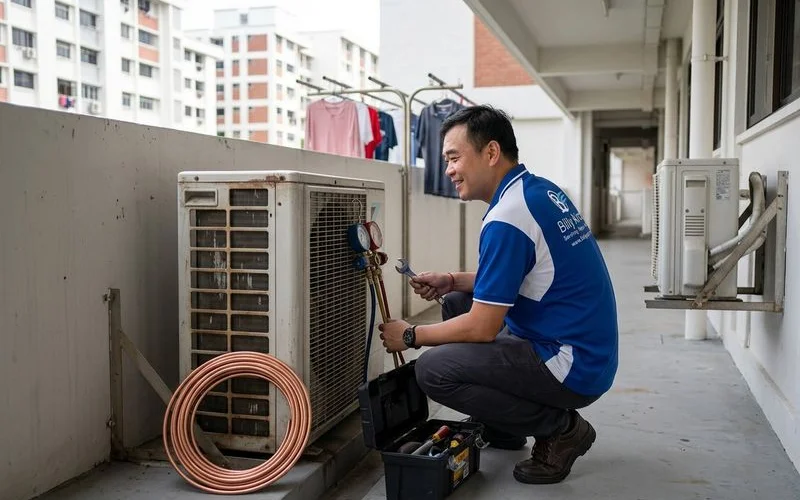
Our team at Billy Aircon has been keeping Singapore cool since 2003, and one question pops up constantly during site visits. Homeowners often ask us why the technician needs to flip a specific switch before servicing the outdoor unit.
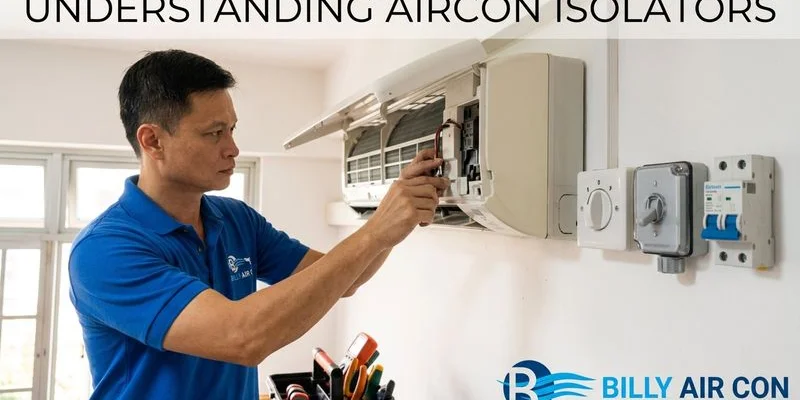
This small box is the aircon isolator switch.
We consider this component the most critical safety feature of your entire cooling system. It completely cuts the power supply to prevent electrical accidents, and the following sections will explain the Singapore Standard SS 638 requirements for using it correctly.
What Is an Aircon Isolator Switch?
We always explain the aircon isolator switch as a dedicated electrical safety checkpoint for your outdoor condenser. This device physically disconnects the 220V to 240V power supply going to the exterior equipment.
The switch acts as an absolute fail-safe. Using the standard remote control only puts the system on standby, which means high voltage still flows to the compressor.
Our technicians require this guaranteed power disconnect before opening any electrical panels. The compressor can start automatically if the thermostat signals a cooling demand, making a physical kill switch mandatory for safe maintenance.
Types of Isolator Switches
We encounter a few main designs across Singapore residential and commercial properties. A high-quality switch ensures reliable operation during heavy monsoon rains.
| Switch Type | Common Brands | Weather Resistance |
|---|---|---|
| Rotary Isolator | Hager, Schneider Kavacha | IP66 (High water protection) |
| Toggle Switch | MK, Legrand | IP40 to IP65 (Moderate) |
| MCB (Miniature Circuit Breaker) | Hager, Schneider | N/A (Indoor only) |
Rotary isolators are the current industry standard for new installations. These feature a round dial that turns firmly between the ON and OFF positions.
Our installers highly recommend upgrading to an IP66-rated rotary model like the Hager or Schneider Kavacha. These specific units provide superior protection against Singapore’s heavy rainfall compared to the older IP65 models.
Where to Find It
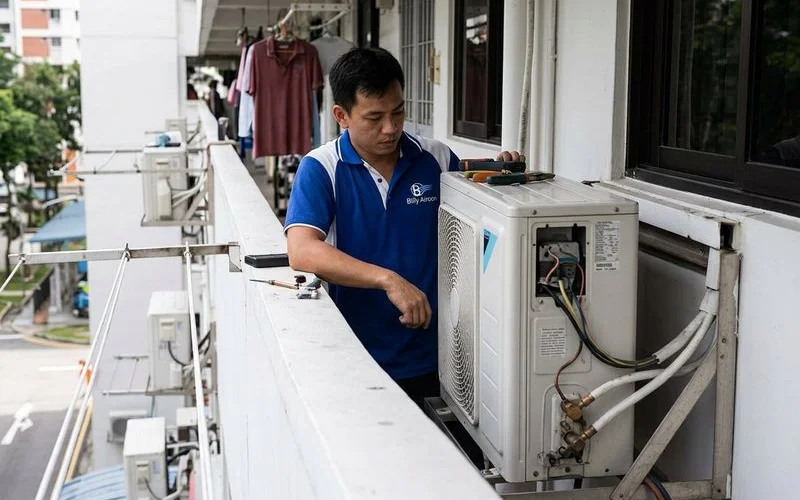
We usually locate the isolator switch within one to two metres of the outdoor condenser unit. This line-of-sight placement ensures maximum safety, allowing the technician to see the disconnected switch while working on the machinery.
- Near the outdoor unit: Mounted directly on the exterior wall next to the condenser brackets.
- On the HDB aircon ledge: Positioned securely on the concrete ledge wall.
- Inside the trunking: Sometimes placed neatly within the protective PVC casing near the exit point.
- Inside the distribution board: Older setups might place a dedicated MCB inside the main electrical panel.
Finding the switch should be effortless. A quick check behind or beside the outdoor unit usually reveals a grey or white weatherproof box.
We often discover a unique Singaporean problem inside these boxes during routine checks. Ants and small lizards love the warmth of the electrical components, often nesting inside and causing unexpected short circuits.
Keep the enclosure tightly sealed to prevent these pests from destroying the wiring.
Why It Matters for Safety
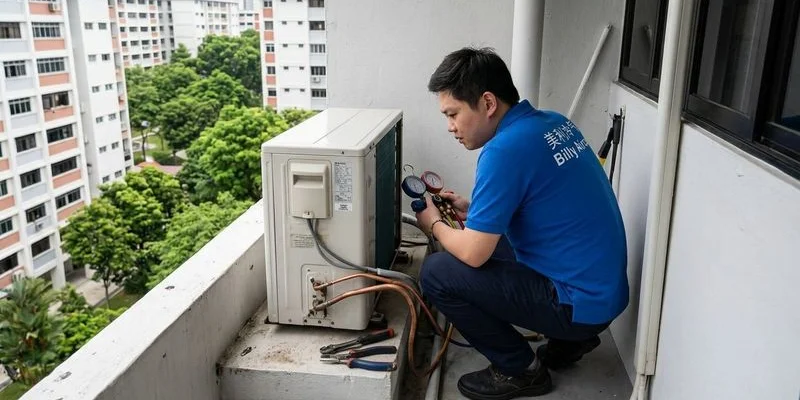
We cannot stress the safety aspect of this switch enough. The Singapore Civil Defence Force (SCDF) reported 304 electrical fires in residential premises in 2025, with faulty wiring and overloaded circuits being the primary culprits.
An accessible isolator switch provides an immediate response mechanism to stop an electrical fault before it escalates.
Maintenance and Repair
Our industry standard dictates that complete de-energisation is non-negotiable. Aircon outdoor units store high voltage, and an unexpected compressor start-up can cause severe injury to the technician.
The isolator provides the only absolute guarantee that the system is dead.
Emergency Situations
We advise clients to use the isolator instantly if they notice sparking or a burning smell. For aircon light blinking issues that suggest electrical faults, turning off the isolator is the safest immediate action.
“Isolating the power locally prevents the electrical fault from tripping the entire house’s main circuit breaker, allowing your other appliances to stay on.”
Water and Electrical Safety
We see many outdoor units exposed to severe weather during the monsoon season. If you suspect heavy rain has breached the electrical compartment, the isolator lets you safely kill the power from a safe distance.
High IP-rated enclosures specifically block this dangerous water ingress.
Power Outage Recovery
Sudden power restorations can force a compressor to start against high head pressure. This sudden surge can severely damage the motor windings inside the unit.
We recommend following a simple restart sequence during a blackout to protect your investment.
- Turn the isolator switch to the OFF position immediately.
- Wait for the main electrical grid to fully stabilize.
- Wait exactly 30 seconds after turning the switch back ON before using the room remote.
These simple steps allow the system pressures to equalise safely.
Singapore BCA Regulations
Our installation teams strictly follow the Singapore Standard SS 638 Code of Practice for Electrical Installations. The Building and Construction Authority (BCA) and Energy Market Authority (EMA) enforce these rules to prevent residential fires and electrocutions.
Every cooling system must meet specific electrical criteria.
- Dedicated 20-Amp Circuit: Each system requires its own 20-amp double-pole isolator.
- Correct Cable Sizing: Copper wiring must handle the maximum current draw of the compressor.
- Earth Leakage Protection: An RCCB must safeguard the dedicated circuit against leaks.
- Accessible Placement: The switch must remain physically accessible for emergency shut-offs.
We regularly encounter HDB flats operating on older 30-amp main switches. In these cases, installing a new 20-amp isolator requires a formal permit from HDB, whereas newer flats with 40-amp supplies skip this extra paperwork.
Common Compliance Issues
A Licensed Electrical Worker (LEW) must supervise or perform any new electrical points added to a home.
We frequently spot severe compliance issues during our installations in older properties. Fixing these faults is crucial for protecting your property from fire risks.
- Missing isolator switches altogether.
- Undersized cables melting under heavy loads.
- Multiple air conditioners dangerously sharing a single circuit.
- Non-weatherproof indoor switches used in exposed outdoor spaces.
When to Use the Isolator Switch
We want you to feel confident operating this device. Understanding the correct timing for a hard power reset extends the lifespan of your sensitive inverter boards.
| Scenario | Action | Reason |
|---|---|---|
| Routine Maintenance | DO turn OFF | Protects the technician from electric shock. |
| Electrical Burning Smell | DO turn OFF | Prevents potential electrical fires instantly. |
| Extended Holidays | DO turn OFF | Saves standby power and prevents surge damage. |
| Daily Operation | DON’T turn OFF | Use the remote control instead for normal use. |
| Quick Power Cycles | DON’T flick fast | Wait 30 seconds to prevent compressor damage. |
Reserving the isolator for emergencies and servicing keeps the internal switch mechanisms from wearing out prematurely.
Maintenance
We consider the isolator an incredibly low-maintenance device. Over time, the harsh tropical sun and driving rain will degrade the plastic enclosure.
- Test the dial annually to ensure it clicks smoothly without stiffness.
- Inspect the rubber weatherproof seals for cracks or dry rot.
- Check the bottom drain holes for insect infestations.
- Wipe away any salt buildup, especially for homes near the coast.
A brittle or jammed switch poses a massive safety risk during an emergency.
We highly recommend replacing a damaged unit during your next servicing appointment. A premium, IP66-rated switch like a Hager or Schneider Kavacha typically costs between $80 and $120, including professional installation.
Conclusion
An aircon isolator switch is much more than a simple plastic dial. It is a critical, legally required safety barrier that protects your home, your equipment, and the professionals who maintain it. Keeping it in good condition is an essential part of reliable aircon servicing for any Singapore home.
We encourage you to locate your switch today and check its condition. Need your isolator switch checked, replaced, or installed properly?
Simply Contact Billy Aircon to ensure your electrical setup complies with all Singapore safety regulations.
Need Professional Aircon Help?
Our experienced technicians are ready to help. WhatsApp us for a fast response — 24 hours guaranteed.
WhatsApp Us Now