Signs Your Aircon Is Low on Gas (And What to Do)
Learn the 6 clear signs your aircon is low on refrigerant gas. Understand why gas depletes, the difference between R22, R410A, and R32, and what a gas top-up costs in Singapore.

Philips
From what I have seen during two decades of field repairs, rising electricity bills are usually the first warning sign.
Your aircon runs constantly, but the room stays uncomfortably warm.
Our team of 26 technicians at Billy Aircon has been diagnosing these exact cooling failures across Singapore since 2003.
Refrigerant is the vital substance that absorbs heat from your space and transfers it outside. Without enough of it, your system simply cannot cool effectively.
Lowering the thermostat setting will not fix the underlying issue.
We are going to break down the primary signs your aircon is low on gas, and what to do to get things running smoothly again.
6 Signs Your Aircon Is Low on Gas
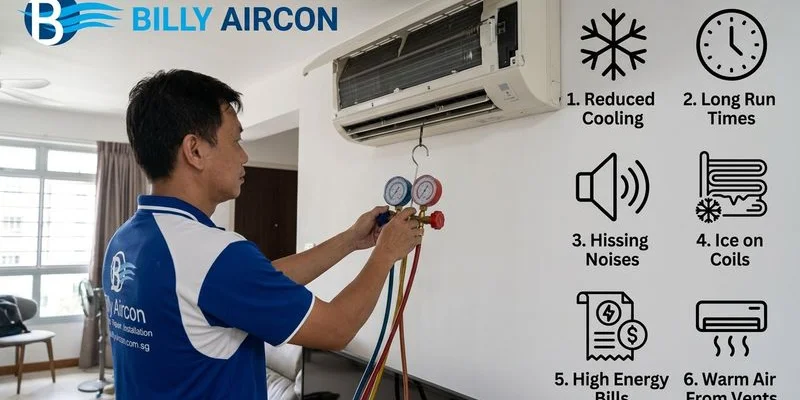
Our daily service logs show that low refrigerant accounts for a massive portion of all cooling complaints.
You can usually spot the problem early by looking for a few specific physical symptoms.
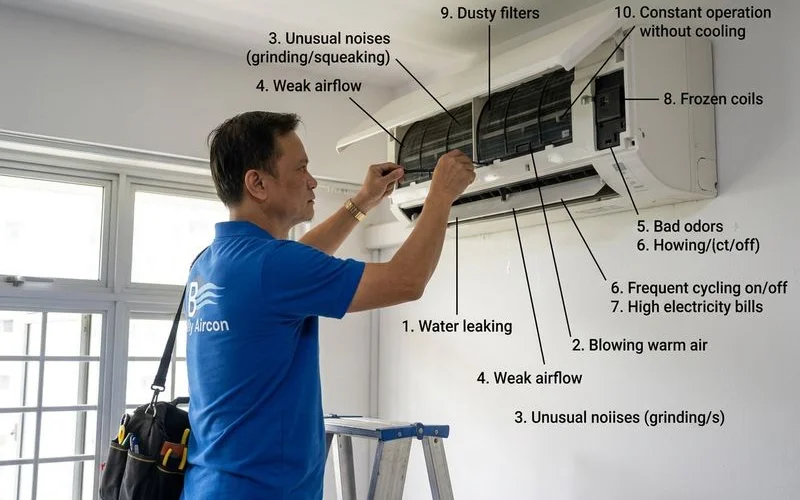
1. Weak or Warm Airflow
The most obvious indicator is the temperature of the air leaving the indoor blower. Your aircon blows air, but it lacks that sharp, icy chill.
We recommend checking the temperature differential with a simple digital room thermometer. A healthy unit should output air that is 8 to 12 degrees Celsius colder than the room’s ambient temperature.
The air coming from the vents will feel lukewarm or barely cool if the evaporator coil cannot absorb enough heat. This issue persists even after running the compressor for 30 minutes or more.
2. Ice Formation on the Evaporator Coil
Open the front plastic panel of your indoor fancoil unit. You might see frost or solid ice building up directly on the aluminium fins.
Our technicians frequently see this freeze-up issue on popular models like the Mitsubishi Electric Starmex when gas drops below critical operating levels.
When refrigerant volume is low, the remaining gas expands too rapidly inside the tubing. This rapid expansion causes the coil temperature to plummet far below freezing.
Moisture in the humid Singapore air then freezes directly onto the cold metal surface. Never try to chip this ice away with a tool, as you risk puncturing the delicate aluminium coils.
3. Higher Electricity Bills
A low-gas aircon works significantly harder and longer to reach your desired room temperature. The compressor runs almost continuously in a futile attempt to cool the space.
Our clients often report a 20% to 30% spike in their monthly SP Group utility statements before calling for a diagnostic check.
This continuous mechanical operation consumes a massive amount of excess electricity. Check your aircon gas levels immediately if your power bill has jumped without any change in your daily usage habits.
4. Unit Takes Forever to Cool
A properly charged 9,000 BTU aircon should easily cool a standard 15-square-metre HDB master bedroom. You should feel a noticeable drop in room humidity and temperature within 10 to 15 minutes.
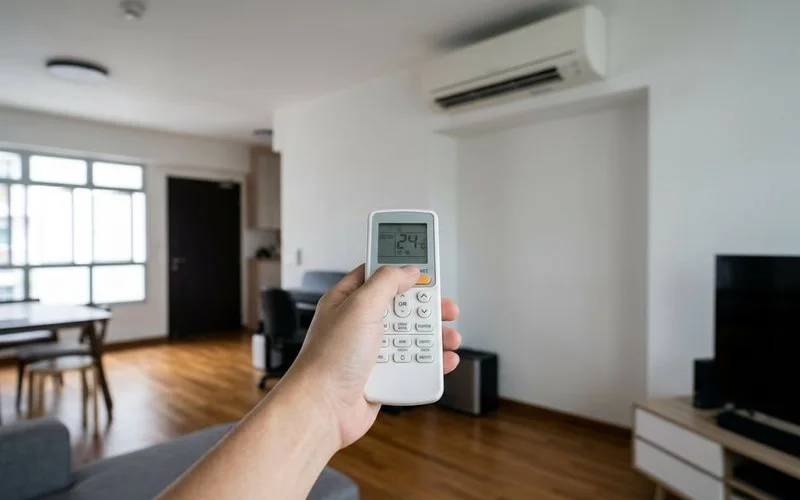
We consider it a major red flag if your unit takes 30 minutes or more to make a difference. The room may never actually reach the target temperature displayed on your remote control.
Low refrigerant severely cripples the system’s heat exchange capacity, forcing you to wait in a warm room.
5. Hissing or Bubbling Sounds
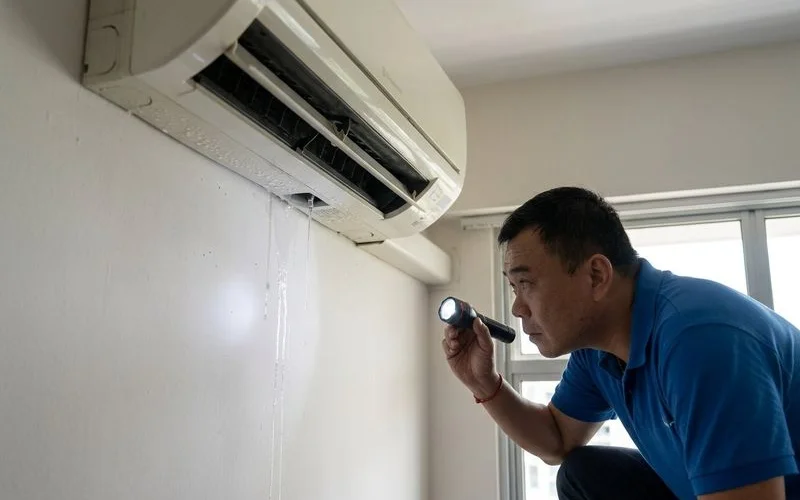
Refrigerant systems operate under immense internal pressure. A high-pressure gas leak often produces a distinct hissing sound right near the copper piping connections.
We sometimes hear a bubbling noise instead, which usually indicates gas passing through a cracked liquid line.
These audible warnings typically originate from the indoor fancoil or the outdoor compressor valves. Turn off the power at the wall isolator switch immediately if you hear either sound. Running a compromised system can destroy the compressor permanently.
6. Short Cycling
The outdoor compressor might turn on and off frequently in very short bursts. This rapid switching prevents the unit from running in its normal, steady cooling cycles.
Our diagnostic tools show that low refrigerant causes abnormal internal pressure drops. These low-pressure readings trigger the compressor’s built-in safety protection limits.
The motherboard shuts the system down repeatedly to prevent total mechanical failure. Many modern Daikin and Panasonic units will indicate this exact fault by flashing a green timer light on the indoor display.
If you are experiencing any of these symptoms, our aircon not cold troubleshooting guide covers additional causes worth checking.
Why Does Aircon Gas Deplete?
A sealed residential air conditioning circuit should theoretically never lose its chemical charge. You have a physical breach in the system if your cooling levels are dropping.
Our repair teams typically trace the exact loss back to a few common culprits:
- Micro-leaks at joints: The flare connections joining the copper pipes to the units can loosen slightly over time. Constant vibration from the rotary compressor accelerates this loosening process. These tiny gaps leak gas at a very slow rate, sometimes taking months to noticeably impact performance.
- Corrosion: Singapore’s high humidity and salty coastal air severely corrode unprotected copper piping. Residents in estates near East Coast Park or Punggol face this issue frequently. Pinhole leaks eventually develop exactly where the pipe wall thins out from oxidation.
- Poor installation: Leaks can develop from day one if the piping was not flared correctly during installation. Installers must tighten all brass flare nuts to the manufacturer’s exact torque specifications to ensure a tight seal.
- Physical damage: External piping running along HDB walls or condominium ledges remains highly vulnerable. Renovation drilling, poorly installed mounting brackets, or aggressive pest activity can easily puncture the soft copper lines.
- Normal wear: Rubber O-rings and internal Schrader valve components degrade naturally after 5 to 7 years of operation. This slow gas loss is highly gradual, meaning many homeowners miss the warning signs until cooling plummets.
Understanding Refrigerant Types
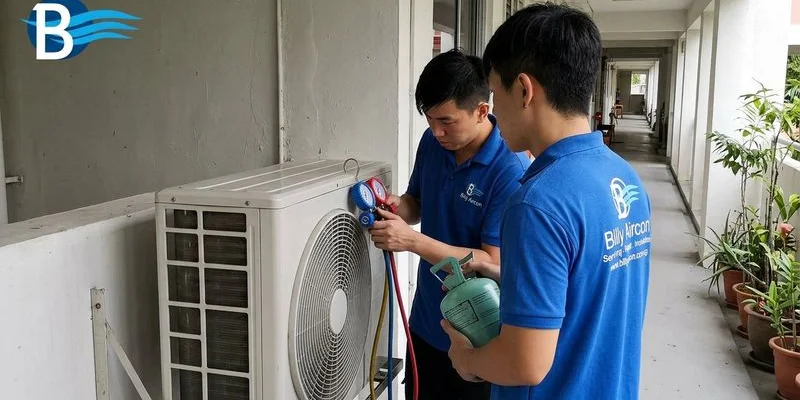
Manufacturers design each aircon compressor to pump a very specific chemical formula. You cannot mix different gases or upgrade an older unit with a modern blend.
Our technicians always verify the exact specification printed on your outdoor condenser’s metal nameplate before starting work.
| Refrigerant Type | Era & Usage | Environmental Impact | Efficiency & Notes |
|---|---|---|---|
| R22 (Freon) | Found in older units built before 2015. | High ozone depletion potential. | Obsolete and increasingly expensive. Production has stopped globally. |
| R410A | The primary standard for installations between 2010 and 2020. | Ozone-friendly but carries a high Global Warming Potential (GWP). | Operates at much higher internal pressures than R22. Components are strictly not interchangeable. |
| R32 | The current mandated standard for new residential single-split systems. | Significantly lower GWP than R410A. | Highly energy efficient. Used by leading modern brands like Daikin, Mitsubishi, and Panasonic. |
Pumping the wrong chemical compound into your system will instantly destroy the compressor mechanisms. This critical mistake immediately voids any remaining manufacturer warranty you might have.
The Gas Top-Up Process
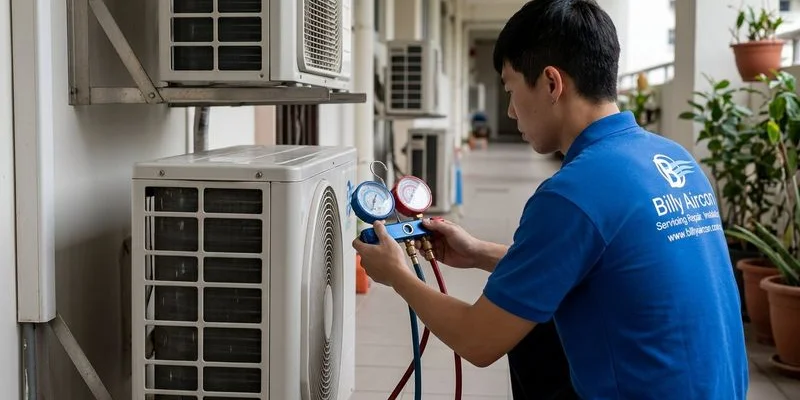
A professional gas top-up requires precise measurement and specialised diagnostic equipment.
We never just blindly attach a hose and pump gas into a leaking system.
A qualified technician must follow a strict, step-by-step diagnostic protocol to ensure safety and efficiency:
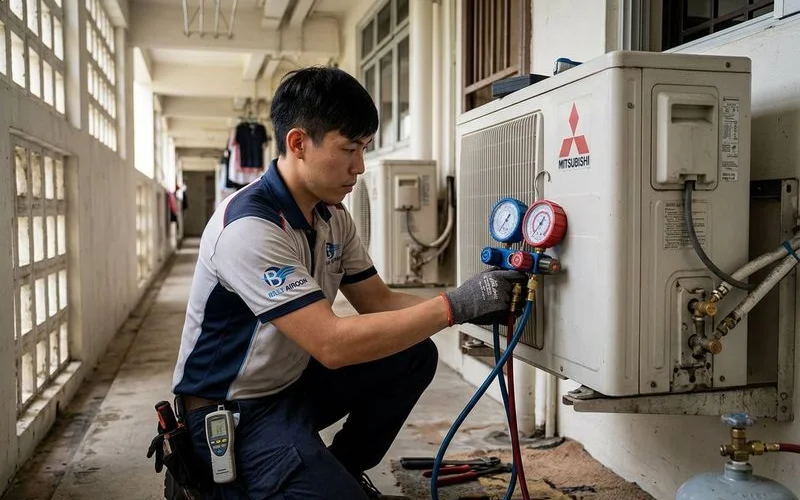
- Check current pressure: The technician attaches a digital manifold gauge set, such as a Fieldpiece or Testo unit. This device reads the high and low side pressures to accurately confirm the exact gas deficit.
- Leak detection: The technician must actively sweep for breaches using an electronic leak detector wand or a liquid soap bubble solution. Adding new gas without sealing the leak guarantees you will need another service call within months.
- Repair leaks: We can often resolve minor leaks at the brass flare joints by re-flaring the copper pipe and re-tightening the connecting nut. Pinhole leaks along the main pipe run usually require high-temperature silver brazing or complete pipe section replacement.
- Charge refrigerant: The technician slowly meters the new gas into the suction line while constantly monitoring the digital readouts. They must hit the exact weight and pressure specifications outlined by the original equipment manufacturer.
- Performance test: The final step involves measuring the supply air temperature leaving the indoor blower. The unit is cooling properly when the output air measures 8 to 12 degrees Celsius colder than the ambient room temperature.
Gas Top-Up Pricing in Singapore
Maintenance costs fluctuate based on the specific chemical blend and the total volume required by your system.
We base these 2026 industry averages on standard residential wall-mounted units commonly found across Singapore.
| Refrigerant | Top-Up Cost | Full Recharge |
|---|---|---|
| R22 | $80 - $120 | $150 - $200 |
| R410A | $80 - $120 | $150 - $200 |
| R32 | $80 - $120 | $120 - $180 |
These listed prices cover the refrigerant charge for a single indoor fancoil unit. You will incur an additional fee if the technician needs to perform complex leak repairs on the piping network.
Standard joint repairs and re-flaring work typically add $50 to $150 to the final service invoice. A full vacuum and recharge becomes necessary if the system is completely empty or heavily contaminated with atmospheric moisture.
When a Top-Up Isn’t Enough
Adding fresh refrigerant is merely a temporary patch if the underlying hardware is actively failing.
Our senior technicians will advise against repeatedly topping up a severely compromised or aging system.
You should carefully evaluate the long-term repair costs in a few specific scenarios:
- Recurring low gas: Needing a fresh charge every 6 to 12 months confirms an active, unresolved leak. The technician has not located the breach, or the existing copper piping is too degraded to hold internal pressure.
- Very old units: Systems older than 10 years usually suffer from multiple degraded internal rubber seals. The cumulative cost of repeated patch repairs will quickly exceed the actual market value of the aging hardware.
- Compressor damage: Forcing a compressor to run continuously on low gas causes severe mechanical overheating. A simple top-up will never restore cooling performance if the internal compressor valves are already permanently warped or scarred.
We recommend comparing repair quotes directly against the price of a modern, energy-efficient system. A new R32 System 3 setup often pays for itself over time through drastically lower monthly utility bills.
If your unit requires frequent interventions, talk to us about whether a final repair or a complete replacement makes better financial sense for your home.
Prevention
Consistent quarterly aircon servicing is your strongest defence against unexpected gas leaks and mid-summer breakdowns.
Our technicians monitor the baseline cooling performance carefully during every standard maintenance visit. They use advanced pressure gauges to spot minor drops long before the system stops cooling entirely.
Scheduling a thorough chemical wash also strips away insulating dirt and biological growth from the aluminium fins. Clean coils ensure you get maximum heat transfer and cooling efficiency from whatever gas remains in the sealed circuit.
Conclusion
Ignoring a warm room or a strange hissing pipe will only lead to steeper repair bills down the line.
Your compressor relies entirely on that vital refrigerant charge to stay cool and properly lubricated during heavy operation.
If you spot any signs your aircon is low on gas, deciding what to do next is crucial for your comfort and budget.
Please Contact Billy Aircon today for a comprehensive system diagnostic check.
We will pinpoint the exact leak, secure the vulnerable pipe joints, and restore your system’s icy performance with a precise, manufacturer-approved gas charge. Dependable aircon servicing in Singapore keeps gas levels in check and your home comfortably cool.
Need Professional Aircon Help?
Our experienced technicians are ready to help. WhatsApp us for a fast response — 24 hours guaranteed.
WhatsApp Us Now