Aircon Chemical Overhaul vs Chemical Wash: What Is the Difference?
Confused between aircon chemical overhaul and chemical wash? Learn the key differences in process, dismantling, time, cost ($80-100 vs $130-180), and when to choose each.

Philips
Since Billy Aircon was founded in 2003 with just five people, the company has grown to a team of 26 dedicated to keeping Singapore cool. We often hear the same frustrating question from property owners trying to maintain their systems. The choice between an aircon chemical wash and a full chemical overhaul is rarely explained clearly.
Our daily service calls reveal the costly results of this confusion. Homeowners end up paying for intensive overhauls they do not need, or they settle for basic washes that leave hidden mould behind.
We will look at the data to uncover what your system actually requires. This guide breaks down the specific procedures to help you choose the exact service for your situation.
Chemical Wash: The Non-Dismantle Deep Clean
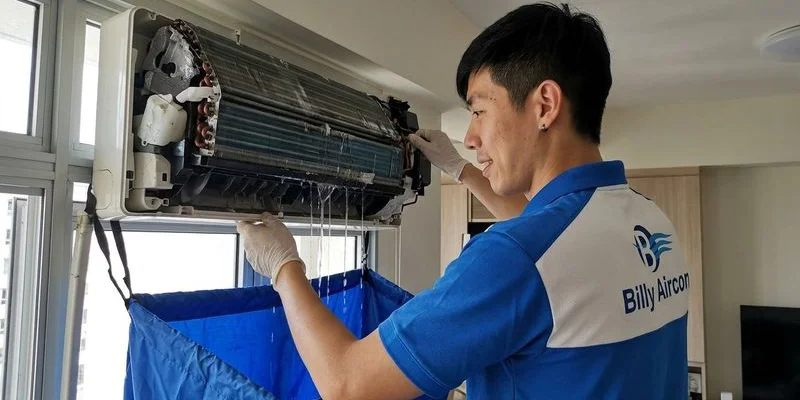
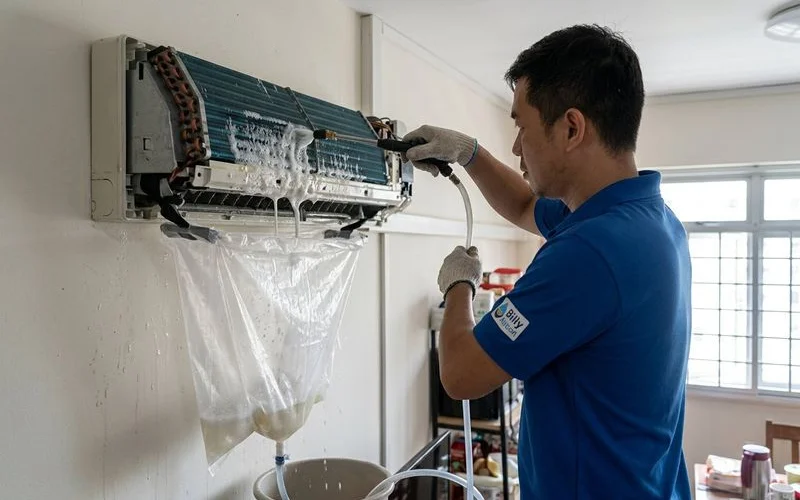
A chemical wash cleans your aircon’s internal components without fully dismantling the unit. The indoor unit stays securely mounted on your wall. We remove the front panel, filters, and drainage tray to access the evaporator coil and blower wheel directly.
This targeted approach is highly effective for routine maintenance. The process dissolves the sticky “aircon slime” that forms when Singapore’s 80% average humidity mixes with urban dust. Our technicians use specialised alkaline-based foaming cleaners that penetrate deep into the aluminium fins.
These commercial-grade solutions safely eradicate common biological growth. Legionella pneumophila and Aspergillus fungi often thrive in stagnant drain pan water, making this deep clean essential for healthy indoor air quality. We highly recommend this service for units facing moderate daily usage.
Chemical Wash Process
- Preparation: Front panel and filters are removed, and a protective plastic sheet shields your wall and floor.
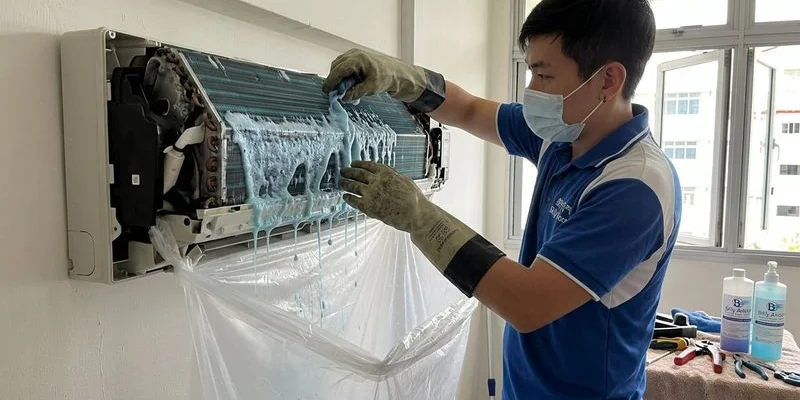
- Chemical Application: An alkaline-based foaming solution targets the evaporator coil, blower wheel, and drain pan.
- Dwell Time: The solution sits for 10 to 15 minutes to dissolve compacted grime, grease, and bacterial biofilm.
- Pressurised Rinse: High-pressure water flushes the dissolved contaminants completely out of the system.
- Drain Line Flush: The condensate pipe receives a chemical flush to clear out algae and prevent water leaks.
- Reassembly: Components are reinstalled, and the unit undergoes a full cooling performance test.
Chemical Wash Details
- Duration: 45 to 90 minutes per unit
- 2026 Average Cost: $80 to $120 per unit
- Dismantling Level: Partial (front panel, filters, and drain tray only)
- Cleaning Depth: Cleans accessible surfaces of the coil, blower, and drain system
- Suitable For: Units serviced irregularly, mild to moderate buildup, and your annual deep clean
Chemical Overhaul: The Full Dismantle Deep Clean
A chemical overhaul takes the indoor unit completely apart. Every single component is separated, individually cleaned, inspected, and then carefully reassembled. We consider this the most thorough restoration possible, short of buying a brand-new system.
This intensive procedure targets severe contamination that a standard wash simply cannot reach. The back side of the evaporator coil often harbours thick layers of compacted dirt and mould. Our full dismantling process exposes these hidden areas for a complete 360-degree chemical treatment.
Complete visibility allows for precise fault detection. Worn bearings, corroded electrical components, or micro-cracks in the drain pan become immediately apparent. We use this opportunity to replace failing parts before they cause a complete system breakdown.
Chemical Overhaul Process
- Complete Dismantling: The indoor fancoil is taken entirely off the wall bracket.
- Component Separation: The evaporator coil, blower wheel, fan motor, drain pan, and PCB board are isolated.
- Deep Chemical Soak: Heavily soiled parts are soaked in a chemical bath to dissolve years of accumulated grime.
- Thorough Inspection: Exposed internal components are checked for rust, wear, and potential electrical faults.
- Reassembly and Remounting: Parts are dried, reassembled with precision, and the unit is secured back on the wall.
- System Commissioning: Refrigerant pressures, drainage flow, and cooling output are rigorously tested.
Chemical Overhaul Details
- Duration: 2 to 3 hours per unit
- 2026 Average Cost: $150 to $250 per unit
- Dismantling Level: Complete (unit removed from wall, all parts separated)
- Cleaning Depth: Every surface of every component, including inaccessible areas
- Suitable For: Heavily neglected units, persistent water leaks, or systems with suspected internal damage
Side-by-Side Comparison
| Feature | Chemical Wash | Chemical Overhaul |
|---|---|---|
| Dismantling Level | Partial (in-place on the wall) | Full (removed from the wall) |
| Coil Access | Front side only | Full 360-degree access |
| Blower Wheel | Surface spray and rinse | Removed and deeply soaked |
| Estimated Duration | 45 to 90 minutes | 2 to 3 hours |
| 2026 Average Cost | $80 to $120 per unit | $150 to $250 per unit |
| Component Inspection | Limited to visible parts | Comprehensive internal check |
| Drain Pan Treatment | Flushed in place | Removed and scrubbed |
| Recommended Frequency | Annually for most homes | Every 3 to 5 years |
When to Choose Chemical Wash
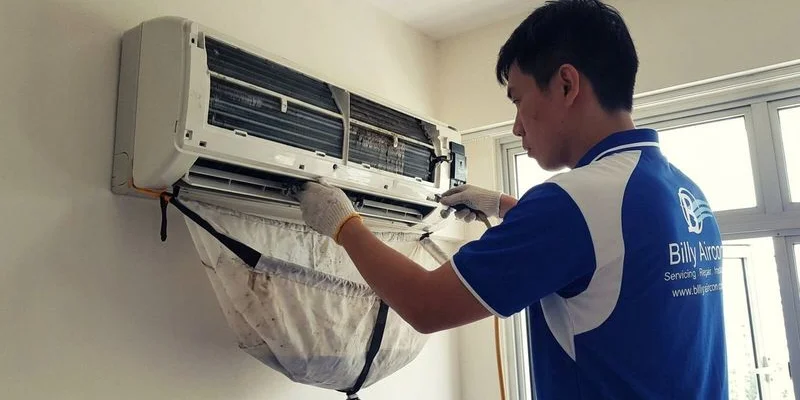
A chemical wash remains the ideal choice for the vast majority of routine maintenance scenarios. Regular upkeep prevents the rapid buildup of dirt and biological growth common in tropical climates. Our team finds that this service handles 80% to 90% of all deep cleaning requirements.
Catching minor issues early prevents expensive repairs down the road. The National Environment Agency (NEA) notes that keeping your system clean is vital for energy efficiency. We frequently see a significant drop in power consumption after clearing a moderately dirty coil.
Maintaining a clean system ensures you capture the energy savings associated with running your aircon at the recommended 25°C.
Signs You Need a Chemical Wash
- Annual Maintenance: You schedule standard servicing regularly and need your yearly deep clean.
- Musty Odours: Mould growth on the coil and blower wheel is creating a noticeable, stale smell.
- Reduced Cooling Power: A layer of dust is acting as insulation on the coil, reducing heat exchange efficiency.
- Post-Renovation Dust: Fine construction debris has bypassed the filters and clogged the internal fins.
When to Choose Chemical Overhaul
Reserve a chemical overhaul for severe situations where a standard wash simply will not suffice. Systems neglected for several years develop hardened, compacted grime that requires mechanical scrubbing. We recommend this intensive approach for heavily contaminated or failing units.
Ignoring persistent problems often leads to permanent equipment failure. Recurring water leaks usually point to a cracked or completely blocked drain pan that requires full removal to fix. Our diagnostic process during an overhaul identifies these structural issues immediately.
Signs an Overhaul is Required
- Prolonged Neglect: The unit has not been serviced for over two years, resulting in heavy buildup behind the coil.
- Persistent Odours: If a musty smell returns within weeks of a chemical wash, the contamination is trapped out of reach.
- Chronic Water Leaks: A cracked or misaligned drain pan requires full dismantling to fix. Unresolved dripping can attract strict fines from HDB or NEA for creating a public nuisance.
- Suspected Internal Damage: Corroded wiring, deteriorated insulation, or failing bearings demand the full visibility of an overhaul.
- Pest Contamination: Cockroach droppings or lizard debris behind the coil pose severe health risks and require total component removal.
Common Mistakes
Over-Prescribing an Overhaul
Some companies push expensive overhauls as their default recommendation simply because they generate more revenue. A unit that receives regular maintenance rarely needs to be completely taken apart. We always start by assessing the actual dirt level before recommending this drastic step.
Ignoring Technician Warnings
If a professional performs a basic wash and warns you that the unit requires deeper work, listen to their assessment. A standard surface clean cannot fix a heavily corroded blower or a cracked back tray. Our technicians document these hidden issues to show you exactly why an overhaul is necessary.
Falling for Fake “Chemical Washes”
Standard servicing focuses on basic filter cleaning and vacuuming, and it does not include commercial chemical treatments. Be highly suspicious of anyone offering a cheap $30 chemical wash. We know that a genuine, safe chemical treatment takes at least 45 minutes and uses specialized, industry-grade solutions.
Skipping Deep Cleaning Entirely
Neglecting your system leads to permanent efficiency loss, hazardous mould growth, and premature compressor failure. The cost of replacing an entire system easily exceeds $1,500 for a standard split unit. Regular chemical washes cost a fraction of that amount and protect your investment.
What About the Outdoor Unit?
Both of these deep cleaning procedures focus almost exclusively on the indoor fancoil unit. However, the outdoor condenser unit plays an equally vital role in dissipating the heat extracted from your home. Our comprehensive maintenance plans always factor in the condition of your outdoor equipment.
Singapore’s urban environment exposes condensers to vehicle exhaust, construction dust, and falling leaves. A clogged outdoor coil forces the compressor to work continuously, drastically shortening its lifespan. We strongly advise homeowners to check their outdoor units at least once a year.
Cleaning the outdoor unit is typically offered as a supplementary service. Technicians apply a heavy-duty coil cleaner to the exterior fins and rinse away the accumulated environmental debris. This simple add-on service generally costs between $30 and $50 and delivers immediate improvements in cooling efficiency.
Outdoor Unit Maintenance Benefits
- Lower Electricity Bills: A clean condenser releases heat faster, reducing compressor strain.
- Longer Lifespan: Removing corrosive urban dust prevents the coils from rusting and failing prematurely.
Our Recommendation
Creating a predictable maintenance schedule is the easiest way to prevent unexpected breakdowns and high electricity bills. Consistency keeps your equipment running smoothly year after year, and trusted aircon servicing in Singapore makes all the difference. We suggest a layered approach to aircon care for the typical Singapore household.
The Ideal Maintenance Timeline
- Every 3 Months: Schedule standard servicing to clean filters, clear the drain pan, and perform basic checks.
- Once a Year: Invest in a chemical wash to dissolve the deeper biofilm and grease that basic servicing cannot reach.
- Every 3 to 5 Years: Plan for a full chemical overhaul to restore aging components and thoroughly inspect for hidden wear.
If your aircon is not cooling well and you are unsure which service it actually needs, contact Billy Aircon for an honest, professional assessment. The team will inspect the unit thoroughly and recommend exactly what is needed to restore your comfort. Our goal is to provide exactly what your system requires to run efficiently.
Need Professional Aircon Help?
Our experienced technicians are ready to help. WhatsApp us for a fast response — 24 hours guaranteed.
WhatsApp Us Now