How to Protect Your Aircon from Pests in Singapore
Cockroaches, lizards, and insects love hiding in aircons. Learn why pests target your unit, the health risks they cause, and how to keep them out for good.

Billy Aircon Team
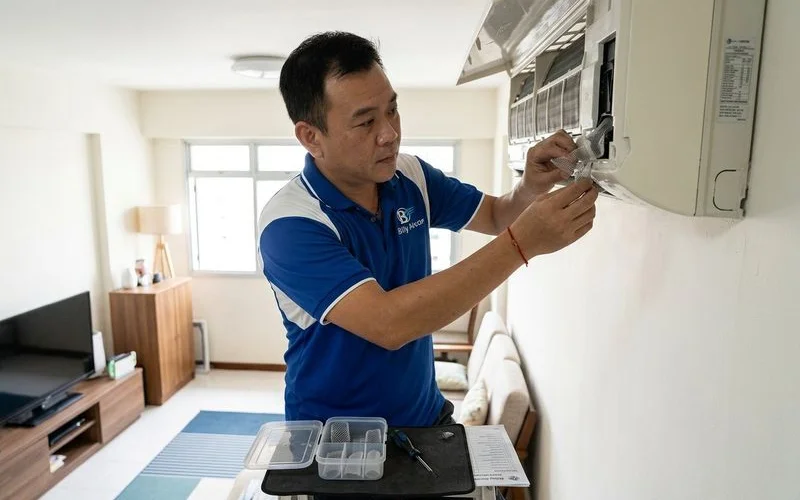
Many homeowners in Singapore dread that distinct, musty odor right after turning on their cooling unit. That smell usually means uninvited guests have turned your system into a nesting ground. Understanding how to protect your aircon from pests in Singapore is crucial for both your health and your wallet.
We started Billy Aircon back in 2003 with just five people, and now our team of 26 has seen exactly what local pests can do to these machines. Tropical humidity makes your cooling unit prime real estate for insects and reptiles. Let’s look at why these critters move in, the actual damage they cause, and the specific steps you can take to keep them out.
Why Pests Love Your Aircon
Your cooling system provides a perfect artificial habitat for urban wildlife. The environment inside matches exactly what most insects and reptiles need to survive and breed.
Moisture: The drain pan and internal condensation create a constant, reliable water source. A typical split unit running in a Singapore HDB flat can produce over a litre of condensation water per hour. German cockroaches and ants need this water far more than they need food.
Warmth: When the system is switched off, the enclosed casing traps ambient heat. The internal temperature quickly stabilizes around 28 to 30 degrees Celsius. This creates a comfortable incubator for cold-blooded creatures like the common Asian House Gecko.
Shelter: The indoor unit casing offers a dark, protected fortress away from predators. Small gaps between the plastic housing and your bedroom wall provide an easy, hidden entrance.
Food source: Household dust, pet dander, and microscopic skin cells constantly bypass your basic filters. This organic matter mixes with condensation to grow mould, creating a steady food supply for smaller insects.
Common Pests Found in Aircons
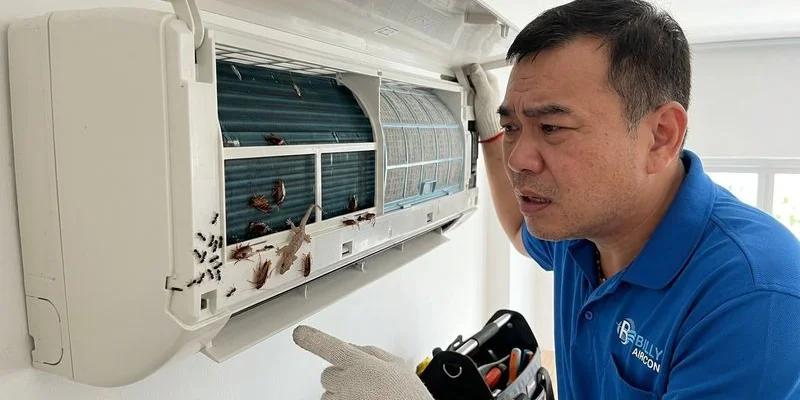
Different insects target specific parts of your cooling system for different reasons. Our technicians regularly pull several distinct types of pests from residential units across the island. Identifying the intruder is the first step to solving the problem.
- Cockroaches: German cockroaches (Blattella germanica) are the most frequent offenders. They typically squeeze through the standard 16mm PVC drain pipes or gaps around the copper insulation. These insects lay egg capsules inside the dark casing and leave toxic droppings directly on the evaporator coil.
- Lizards (Geckos): The Asian House Gecko actively hunts the smaller insects drawn to the unit. They often crawl into the outdoor compressor housing or follow the trunking into your bedroom unit. A dead lizard decaying inside the fan blower will cause a severe, lingering foul odour.
- Ants: Species like the Crazy Ant are naturally attracted to mild electrical currents. They build massive colonies inside the plastic housing and can completely block a drainage line with their nesting debris.
- Mosquitoes: A blocked drain pan holds stagnant water, creating an ideal nursery. This is where Aedes mosquitoes breed.
- Beetles and moths: The LED display lights on modern indoor units attract nocturnal flying insects. They slip through the air louvres at night and frequently get trapped inside the spinning fan drum.
Health Risks
Pest infestations inside your cooling equipment go beyond a simple nuisance. These intruders actively degrade your indoor air quality and create hidden biological hazards.
Hidden Biological Hazards
The air blowing out of a contaminated unit carries microscopic threats directly into your living space. We frequently see families suffering from unexplained coughs until their system is properly sanitized.
- Allergies and asthma: Cockroach saliva, feces, and shedding body parts contain highly potent allergen proteins. As the blower fan pushes air across the dirty coils, these microscopic particles are dispersed straight into your bedroom.
- Bacterial contamination: Concentrated pest droppings turn the wet drain pan into a bacterial breeding ground. Pathogens like Salmonella and E. coli thrive in this dark, damp sludge.
- Dengue risk: The National Environment Agency (NEA) actively monitors homes for stagnant water to prevent dengue clusters. A clogged drain pan harboring Aedes mosquito larvae can result in a strict $200 fine for homeowners.
- Respiratory issues: Decomposing lizards or insects produce strong gases and accelerate deep-seated mould growth. Breathing in these mould spores nightly often triggers chronic sinus issues.
How Pests Get In
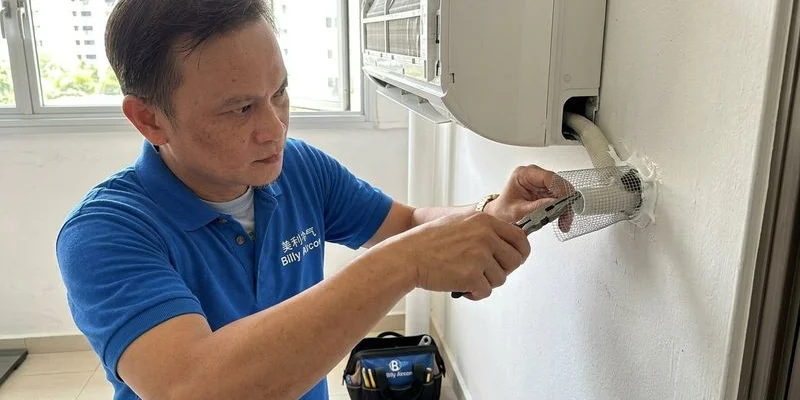
Insects only need a fraction of an inch to invade your home. Understanding their travel routes makes it much easier to block them.
Common Entry Points
- The drain pipe: This open-ended PVC tube is the primary highway for insects. Most residential setups use a standard pipe that drains directly into a bathroom floor trap. Cockroaches easily climb up this wet, dark tunnel straight into your bedroom unit.
- Gaps around piping: The core hole drilled through your wall for the copper pipes is rarely sealed perfectly. Even a tiny 5mm gap in the white putty is enough space for an adult cockroach to squeeze through.
- Outdoor unit openings: The compressor bracket and metal grille feature large ventilation gaps. Geckos easily climb into the metal casing and then follow the insulated copper trunking straight into your home.
- Vents when off: The horizontal louvres remain open or loosely closed when the power is off. Flying insects can bypass the basic mesh filters and enter the mechanical housing without any resistance.
Prevention: How to Protect Your Aircon from Pests in Singapore
Stopping insects before they enter is always the smartest strategy. A few minor adjustments can secure your system for years.
We highly recommend inspecting your external trunking at least once a year. Small cracks in the insulation can develop over time, providing new pathways for ants.
Effective Sealing Strategies
Seal the drain pipe: Secure a piece of fine stainless steel wire mesh over the exposed end of the bathroom drain pipe. This physical barrier stops insects from crawling up while allowing condensation to drip freely.
Seal wall penetrations: Inspect the circular hole where the insulated pipes pass through your concrete wall. Fill any visible cracks with weatherproof silicone sealant or polyurethane expanding foam to block hidden entryways.
Run your cooling system regularly: An idle machine offers a quiet, safe nesting zone. Turning the system on for just 30 minutes every few days disrupts any nesting attempts with cold air and moving water.
Keep the surrounding area clear: Avoid stacking storage boxes or tall furniture directly under the indoor blower. Clutter creates a protected ladder for crawling insects to reach the plastic casing.
Schedule consistent maintenance: Professional technicians thoroughly flush the drainage lines during routine aircon servicing. They also inspect the hidden back-tray for early signs of cockroach activity.
Preventive Action Costs
| Prevention Method | Estimated Cost | Main Benefit |
|---|---|---|
| Stainless Steel Mesh | Under $5 | Blocks cockroaches from the bathroom drain pipe |
| Silicone Sealant Tube | $8 - $12 | Seals core wall gaps permanently |
| Regular Maintenance | $40 - $80 per unit | Clears internal mould and detects early nesting |
What to Do If Pests Are Already Inside
Discovering an active infestation requires immediate, careful action. Handling the situation incorrectly can cause permanent mechanical damage.
Our service teams often see expensive parts ruined by homeowners trying a quick DIY fix. Please follow these specific steps if you notice droppings or smell a foul odour.
-
Never spray commercial insecticide into the vents. Standard aerosol bug sprays contain harsh chemical propellants. These chemicals will quickly corrode the thin aluminum fins on your evaporator coil and circulate toxic fumes into your bedroom.
-
Disconnect the power immediately. Turn off the main isolator switch next to the unit. Carefully lift the front plastic cover to check the basic dust filters for trapped insects or dark spotting.
-
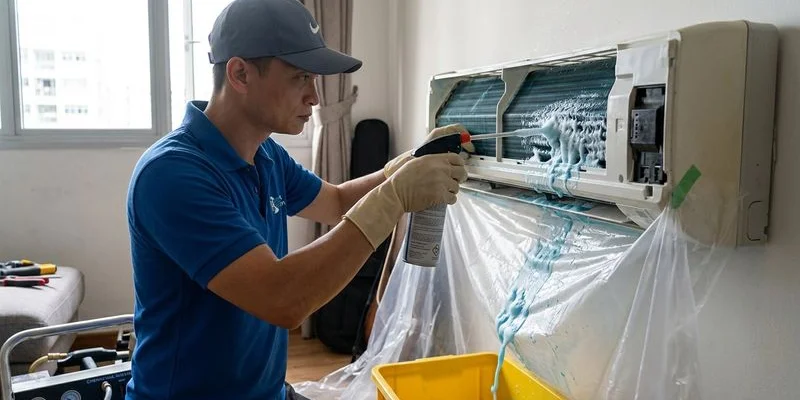
Schedule a specialized deep clean. A standard wipe-down cannot reach the back drainage tray. Booking a professional chemical wash is the safest way to flush out dead bugs, sticky eggs, and harmful bacteria. We use a specialized alkaline-based cleaning solution that dissolves organic matter without harming the copper pipes.
-
Consider a full teardown. If ants have nested inside the electrical control box, a complete chemical overhaul is required. Technicians must dismantle the entire plastic chassis to hand-clean the individual fan blades and hidden electrical housings.
-
Implement physical barriers. Once the unit is completely sanitized, install mesh screens on your drain pipes to prevent the next generation of pests from returning.
The Cost of Ignoring Pests
Ignoring a minor bug problem usually leads to a major mechanical failure. Lizards and ants are notorious for short-circuiting expensive electronic components.
We regularly replace fried circuit boards that could have been saved with a simple five-dollar piece of mesh. The financial difference between basic prevention and emergency repairs is staggering.
Average Repair Costs After Infestation
| Damaged Component | Typical Replacement Cost | Common Pest Cause |
|---|---|---|
| Inverter PCB Board | $250 - $450 | Ants or lizards causing a short circuit |
| Plastic Drain Pan | $90 - $140 | Heavy corrosion from acidic cockroach waste |
| Internal Sensor Wiring | $120 - $250 | Chewed insulation by larger pests |
| Deep Coil Sanitization | $100 - $180 | Removing severe mould and bacterial buildup |
Spending a few dollars on protective netting is a much smarter investment. Booking your regular servicing also ensures a professional catches these tiny intruders before they destroy your circuit board.
When to Call a Professional
Spotting a single ant near your cooling unit might not be an emergency. Seeing a line of them marching into the casing definitely is.
If you catch a distinct decaying smell or notice dark spots on your wall below the blower, it is time to step in. Reach out and contact Billy Aircon for a thorough site inspection. We will carefully dismantle the housing, sanitize every contaminated surface, and apply proper sealants to close off those hidden entryways.
Knowing exactly how to protect your aircon from pests in Singapore saves you from breathing in harmful allergens and paying for entirely avoidable repairs. Consistent aircon servicing is your best defence against pest-related breakdowns. Take action today before a tiny gecko causes a massive power failure.
Need Professional Aircon Help?
Our experienced technicians are ready to help. WhatsApp us for a fast response — 24 hours guaranteed.
WhatsApp Us Now