10 Signs Your Aircon Needs Repair
Is your aircon acting up? Learn 10 warning signs that mean your aircon needs professional repair — from weak airflow and water leaks to strange smells and rising bills.

Philips
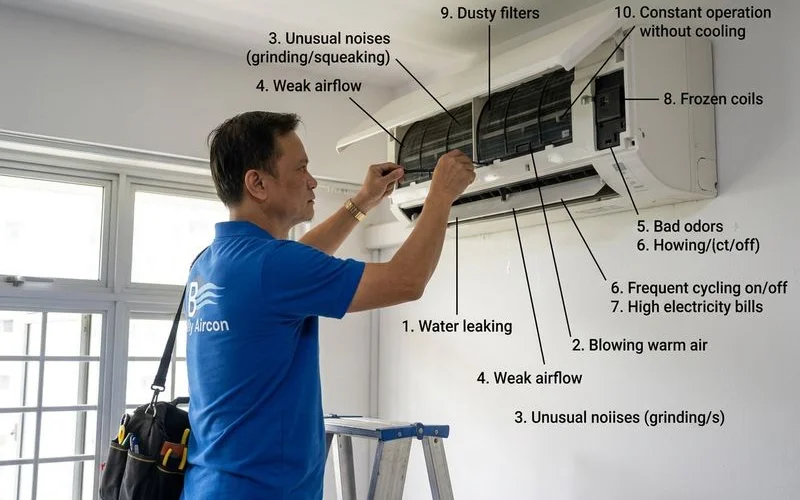
From what we see in the field, a reliable cooling system is easily taken for granted until a minor issue disrupts your entire home. You might notice the room takes longer to cool, or water starts dripping down the wall. Either way, these are the top 10 signs your aircon needs repair.
We founded Billy Aircon back in 2003 with just five people, and our company has since grown to a team of 26 dedicated to keeping Singapore cool. This steady growth comes from understanding exactly how quickly a small fault can escalate.
Catching problems early saves money and prevents a complete breakdown in our intense tropical heat.
Let’s review the precise indicators of equipment failure and outline the practical steps you should take next.
1. Weak Airflow
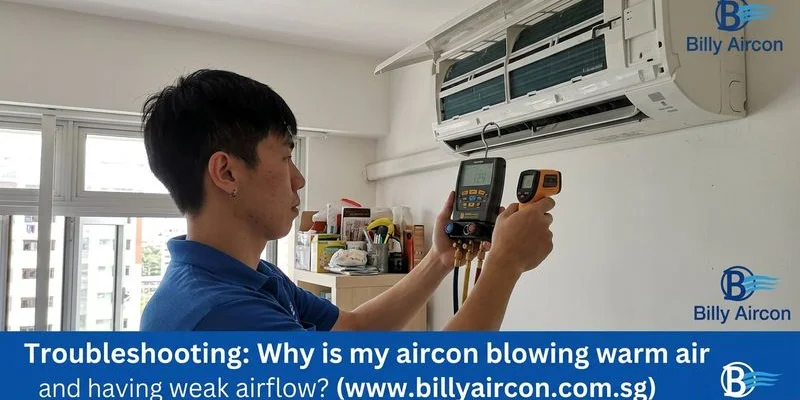
You can feel air coming from the vents, but it is noticeably weaker than before. Hold a tissue near the vent to test the output. The airflow is compromised if the tissue barely moves.
We often find that a clogged filter is the primary culprit behind this issue. A dirty air filter restricts circulation and can reduce system efficiency by up to 15 percent. This forces the blower motor to work harder, which increases wear and raises your electricity costs.
Common Causes of Weak Airflow
Check the following components if your airflow drops:
- Clogged air filter: Clean this first, as a simple wash resolves most airflow issues.
- Dirty blower wheel: Dust accumulation heavily impacts the spinning efficiency.
- Failing fan motor: The motor requires professional replacement if it struggles to turn.
- Blocked evaporator coil: Deep blockages require specialised cleaning.
Why You Must Act Quickly
Reduced airflow puts immediate stress on the compressor. The urgency here is medium, but ignoring it will definitely shorten the lifespan of your unit.
2. Warm Air Blowing
The system runs constantly, but the air simply isn’t cold. The room temperature barely drops even after 20 to 30 minutes of operation. This remains the most common complaint our technicians handle daily.
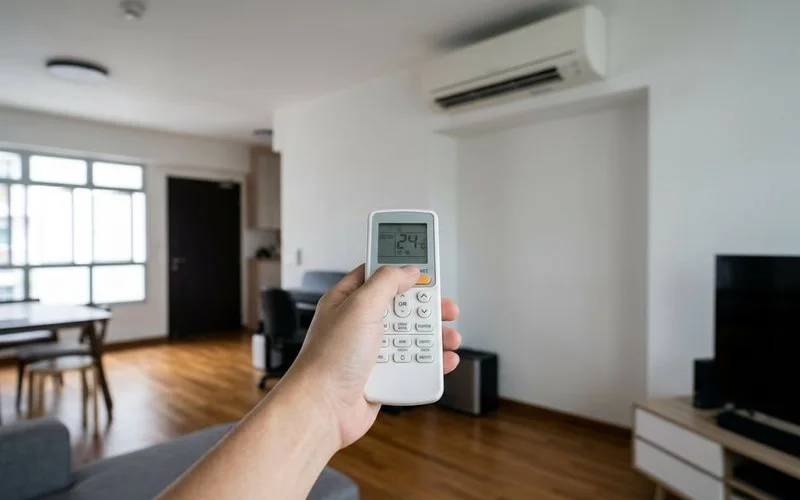
Our team knows that a unit blowing warm air is often starving for refrigerant gas. The standard temperature setting in Singapore should sit comfortably between 23 and 25 degrees Celsius. Your system needs immediate attention if it cannot reach this baseline.
Typical Reasons for Warm Air
Several specific faults can stop the cooling process:
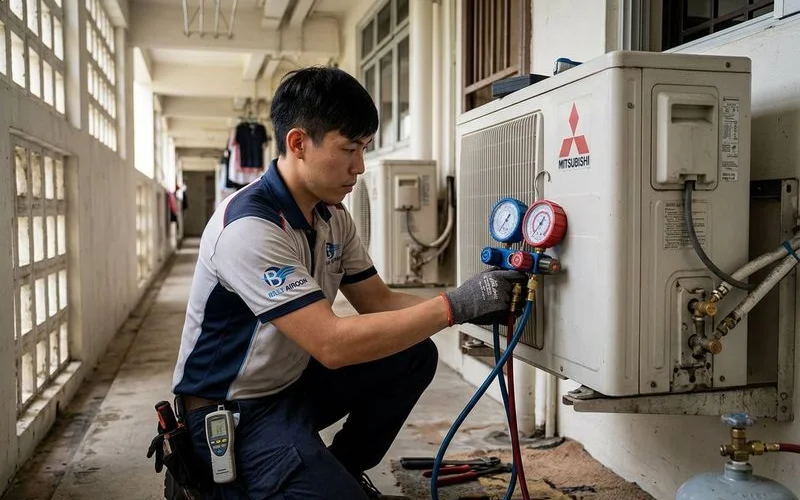
- Low refrigerant levels: A leak causes the gas to escape, requiring a pressure test and top-up.
- Dirty evaporator coil: Thick grime prevents the coil from absorbing heat.
- Compressor failure: The heart of the system might be failing to circulate the gas.
- Faulty expansion valve: This valve regulates the cooling fluid and can get stuck.
You can read our comprehensive aircon not cold guide for a deeper look at these specific components.
Immediate Risks of Ignoring the Issue
The urgency is extremely high for this problem. Running an aircon that cannot cool wastes massive amounts of electricity and will eventually burn out the compressor.
3. Water Leaking from the Unit
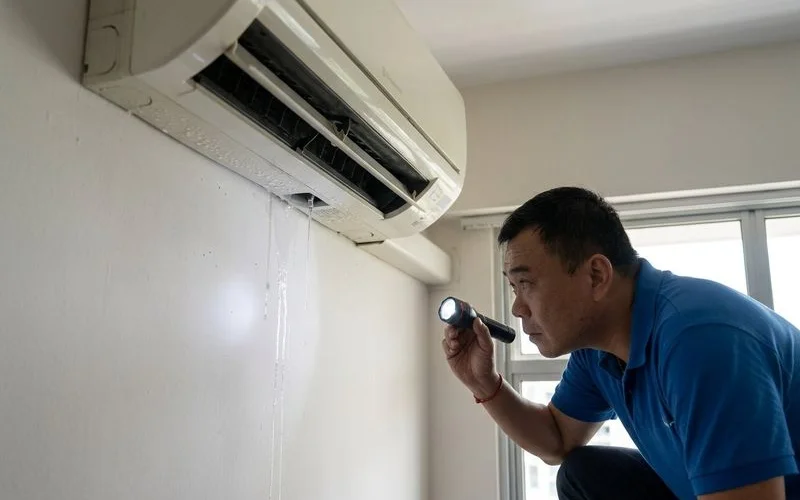
Water dripping from the indoor unit onto the wall or floor is a clear sign of trouble. Condensate should drain smoothly through the designated pipe, rather than overflowing into your living space.
We frequently see drainage issues caused by the high 80 percent humidity in Singapore. This moisture encourages algae and jelly-like substances to grow inside the PVC drain pipes. A complete blockage forces the accumulated water back up into the drain pan.
Common Sources of Water Leaks
A leak usually stems from one of these specific failures:
- Blocked drain line: Algae and dirt restrict the water flow completely.
- Cracked drain pan: Old plastic pans become brittle and crack over time.
- Loose connections: The joints between the pipe and the unit can detach.
- Frozen evaporator coil: The ice melts rapidly and overwhelms the drain pan.
Our detailed water leaking troubleshooting guide covers exact methods to identify these specific leaks.
The True Cost of Water Damage
The urgency is high because water damage to walls, flooring, and furniture adds up rapidly. HDB regulations strictly prohibit aircon leaks that affect neighbours or common areas.
A severe lack of maintenance could even lead to fines of up to $10,000 if structural components fall or cause damage. A blocked drain also creates the perfect dark, damp environment for mould growth inside the unit.
4. Strange Noises
Modern units should operate with a quiet hum, typically registering around 25 to 30 decibels. Any new or unusual sound exceeding this gentle background noise deserves your immediate attention.
What Different Noises Mean
Listen closely to the specific type of sound to identify the failing part. We use these auditory clues to diagnose problems before even opening the casing.
| Type of Noise | Probable Cause | Urgency Level |
|---|---|---|
| Grinding or scraping | The blower wheel is hitting something, or the fan motor bearings are completely worn out. | High |
| Rattling | Loose internal components, unfastened screws, or foreign objects vibrating inside the casing. | Medium |
| Buzzing | An electrical issue is occurring, possibly a failing capacitor or a stuck contactor. | High |
| Repeated clicking | The relay or main control board is struggling to engage. | Medium |
| Hissing | High-pressure refrigerant is actively leaking from a cracked copper pipe. | High |
| Gurgling | Air is trapped in the refrigerant line, or the drain pipe is partially blocked. | Medium |
Assessing the Threat Level
The urgency varies wildly depending on the specific sound. A simple rattle might just be a loose screw that needs tightening. A harsh grinding or hissing sound points directly to serious component failure and requires immediate shutdown.
5. Bad Smell
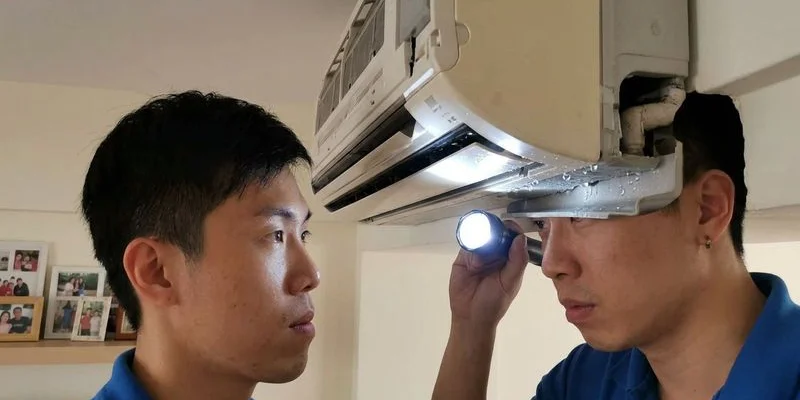
When your equipment emits an unpleasant odour, the specific type of smell usually points straight to the root cause. The dark, moist interior of an air conditioning system easily traps volatile organic compounds (VOCs) and biological growth.
Our technicians know that ignoring these smells can impact your indoor air quality and your health. You should act quickly to resolve any foul scents before they spread throughout the entire property.
Decoding Aircon Odours
Different smells indicate different types of contamination:
- Musty or mouldy: This signals thick mould and bacteria on the evaporator coil and blower. The unit desperately needs a thorough chemical wash.
- Sour or vinegar-like: Bacterial growth is multiplying rapidly in stagnant drain pan water.
- Sweet chemical smell: This indicates a possible refrigerant leak. You must turn off the unit and ventilate the room immediately.
- Burning or electrical smell: The motor is overheating, wire insulation is melting, or a capacitor is failing. Turn off the power immediately at the main isolator switch.
Safety and Health Urgency
The urgency is exceptionally high for burning or chemical smells because they present a severe fire or toxicity risk. A musty smell carries a medium urgency but creates a lingering health risk over time.
6. Electricity Bill Spike
Your cooling system is typically the biggest electricity consumer in a Singaporean home, often accounting for 30 to 50 percent of the total bill. A sudden surge in costs without any changes in your usage patterns is a major red flag.
We closely monitor energy rates, and with the SP Group electricity tariff sitting around $0.29 per kWh in early 2026, an inefficient system drains your wallet fast. An overworked unit running eight hours a day can easily add $30 to $50 of wasted electricity to your monthly statement.
Why Your System is Wasting Power
Several hidden issues force your equipment to consume excess electricity:
- Dirty coils: Grime reduces heat transfer efficiency, forcing longer cooling cycles.
- Low refrigerant: The system runs continuously because it cannot reach the target temperature.
- Failing compressor: A struggling motor draws significantly more amps to maintain rotation.
- Thermostat malfunction: A broken sensor keeps the unit running non-stop without pausing.
The urgency here is medium. This is not an immediate emergency, but your NEA energy efficiency rating drops drastically the longer you wait to fix it.
7. Short Cycling
The compressor turns on, runs for just a few minutes, shuts off, and then restarts shortly after. This rapid on and off behaviour is called short cycling, and it places immense mechanical stress on your system.
Our repair logs show that short cycling dramatically shortens the lifespan of critical parts. Modern inverter units are designed to adjust their speed smoothly, so abrupt stopping and starting always indicates a serious fault.
Triggers for Rapid Cycling
The system forcefully shuts itself down to prevent catastrophic damage when it detects these problems:
- Low refrigerant pressure: This triggers the high-pressure protection switch.
- Dirty condenser coil: The outdoor unit overheats and trips the thermal overload sensor.
- Faulty thermostat: The sensor misreads the room temperature and sends incorrect signals.
- Oversized capacity: A unit too large for the room cools the space too fast and shuts down prematurely.
The Cost of Compressor Damage
The urgency is extremely high. The compressor is the most expensive component to replace in Singapore, typically costing between $500 and $1,500 depending on the brand. Allowing short cycling to continue will guarantee an expensive compressor replacement.
8. Ice on the Unit
Frost or solid ice visible on the evaporator coil, the copper pipes, or the outdoor condenser is a dramatic warning sign. Normal operating temperatures for an evaporator coil sit between 4 and 7 degrees Celsius. Ice forms rapidly when the internal temperature drops below the freezing point.
We strongly advise against trying to chip the ice off the delicate aluminium fins. Using a sharp tool can easily puncture the pressurised copper lines, turning a simple fix into a massive repair job.
Why Freezing Occurs
Ice accumulation is never a normal part of the cooling cycle. It usually happens for these specific reasons:
- Low refrigerant gas: The remaining fluid expands too much and freezes the surrounding coil.
- Restricted airflow: Blocked filters prevent warm room air from melting the natural condensation.
- Faulty expansion valve: The valve gets stuck and allows too much cooling fluid through.
- Failing blower motor: The fan fails to push air across the icy coils.
Safe Thawing Procedures
Turn off the system immediately and let the ice melt completely, which usually takes one to two hours. Clean the filter once the block of ice has melted. You must call a technician if the frost returns upon restarting, because running a frozen unit will destroy the compressor.
9. Error Codes or Blinking Lights
Modern equipment features built-in diagnostic systems that display specific error codes on the remote or flash indicator lights in a repeating pattern. These alerts tell you exactly which component is failing.
Our technicians rely on these codes to bring the correct spare parts to your home. For example, a Daikin U4 error code indicates a communication failure between the indoor and outdoor units. A Mitsubishi timer light flashing twice usually points to a faulty indoor temperature sensor.
Decoding the Blinking Lights
Always note the exact error code or count the specific blink pattern before calling for help.
| Brand & Indicator | Typical Meaning | Required Action |
|---|---|---|
| Daikin (e.g., U4 Code) | Communication error between indoor and outdoor PCB. | Requires professional wiring or PCB replacement. |
| Mitsubishi (2 Blinks) | Indoor temperature sensor failure. | The sensor needs to be tested and replaced. |
| Mitsubishi (3 Blinks) | Indoor fan motor malfunction. | Requires motor inspection and repair. |
| General Codes | Varies widely by manufacturer. | Check the user manual for the specific definition. |
How to Reset the System
Some minor communication errors will clear after a simple power cycle. Turn off the power at the main isolator switch for 30 seconds, and then restart the system.
The fault requires professional diagnosis if the blinking light returns. Communication errors might just be minor wiring issues, but compressor codes indicate severe mechanical faults.
10. The Unit Is Over 10 Years Old with Multiple Issues
Age alone does not guarantee a replacement is necessary, but age combined with frequent breakdowns is a strong indicator. The National Environment Agency (NEA) notes that older units lose their energy efficiency over time. The equipment is nearing the end of its functional life if you are calling a technician more than twice a year.
We always recommend applying the 50 percent rule when evaluating an older system. You should replace the entire system rather than repairing it if the quoted repair cost exceeds half the price of a brand new setup.
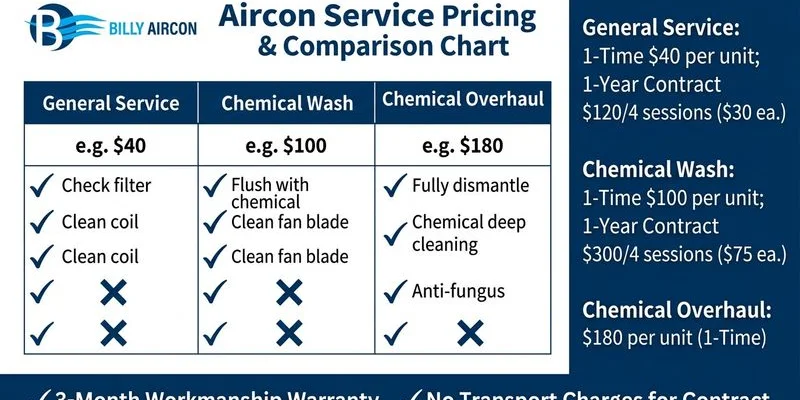
Making the Financial Decision
Consider this practical breakdown before spending more money on an aging system:
- The Repair Scenario: A compressor replacement costs $800 on a 12-year-old system.
- The Replacement Scenario: A brand new, highly efficient unit costs $1,500.
- The Verdict: Paying $800 to fix obsolete equipment is a poor investment.
Always weigh the immediate repair price against the long-term energy savings of a modern, efficient model.
What to Do After Spotting These 10 Signs Your Aircon Needs Repair
Recognising these warning signs early is the smartest way to protect your cooling system and your wallet. You can prevent massive repair bills by taking immediate action when performance drops.
We suggest checking the basics first, such as cleaning the air filter and performing a simple power cycle.
Every problem on this list gets significantly worse and more expensive with time. A simple blocked drain today easily becomes a flooded ceiling tomorrow. A minor gas leak today will result in a dead compressor next month.
Book a proper diagnosis with a qualified technician to pinpoint the exact problem in a single visit. Regular aircon servicing catches most of these minor faults before they escalate into major disruptions. If you are not on a consistent maintenance schedule, now is the perfect time to start.
Have you noticed any of these 10 signs your aircon needs repair in your home or office? Contact Billy Aircon for a comprehensive diagnostic visit today.
Our team will identify the exact fault, explain your repair options clearly, and restore your comfort with honest pricing. Reliable aircon servicing in Singapore is the best way to stay ahead of these problems.
Need Professional Aircon Help?
Our experienced technicians are ready to help. WhatsApp us for a fast response — 24 hours guaranteed.
WhatsApp Us Now